Free, no sign-up, nothing saved: reconstitution and dilution math, a multi-peptide blend calculator, and a peptide cycle & supply planner with one-click calendar export. Work in mg or mcg for standard 3 ml cartridges and multi-use vials.
For research and educational use only. Preppin Peppers sells laboratory hardware and materials (reconstitution pens, cartridges, and bacteriostatic water), not peptides or anything for consumption. All content here, including the calculators, is educational and is not medical, veterinary, dosing, or compounding advice. It has not been evaluated by the FDA and is not intended to diagnose, treat, cure, or prevent any condition, or for human or animal use. You are responsible for complying with your local laws, and use is at your own risk.
Peptide Reconstitution Calculator
Enter your vial and the bacteriostatic (or sterile) water you added, then see exactly how many units to draw. Toggle mg or mcg, and hover any ? for help.
Concentration?How concentrated the mixed solution is: milligrams of peptide per millilitre.5.0 mg/ml
Volume to draw?The millilitres you would draw to get your target amount.0.05 ml
Draw on a U-100 scale?The same volume in units on a standard U-100 syringe or pen. 1 unit = 0.01 ml.5 units
Per unit?How much peptide one unit on a U-100 syringe delivers at this concentration.50 mcg
Draws per vial?How many target-size draws one vial holds, rounded down.10
5 units on a U-100 syringe scale · over 100 units, split into more than one draw
1 unit on a U-100 syringe or pen = 0.01 ml. 1 mg = 1000 mcg. Illustrative fluid math for research reconstitution.
How to reconstitute your vial
Reconstitution is adding liquid, almost always bacteriostatic water, to a freeze-dried (lyophilized) peptide so it can be measured accurately.
Clean both stoppers. Wipe the bacteriostatic water vial and the peptide vial with an alcohol swab before puncturing either one.
Draw the water first. Pull the full amount of bacteriostatic water into the syringe before adding anything to the peptide vial.
Add the water slowly. Aim the stream down the inside wall of the vial instead of blasting the powder directly.
Swirl gently. Roll or swirl the vial until the powder dissolves fully. Never shake it hard.
Refrigerate after mixing. Keep the reconstituted vial cold and away from light unless the label says otherwise.
Get your target amount from a licensed provider. This calculator handles the arithmetic, not the protocol.
How the math works
The peptide dissolves evenly in the water you add, so the concentration is simply the milligrams in the vial divided by the millilitres of water. U-100 syringes are marked in units, and 100 units equal 1 ml. The three formulas this calculator uses:
Concentration (mg/ml) = vial mg ÷ water ml
Units to draw = (target mcg ÷ (vial mg × 1000)) × water ml × 100
Draws per vial = (vial mg × 1000) ÷ target mcg, rounded down
Example: a 5 mg vial reconstituted with 2 ml of bacteriostatic water is 2.5 mg/ml, or 25 mcg per unit. A 250 mcg target is 10 units on a U-100 syringe (0.10 ml), and the vial holds 20 draws.
Peptide Cycle Calculator & Supply Planner
Add a card per peptide with its amount, schedule, and cycle length, then export to your calendar. Hover any ? for help.
Research supply & scheduling math only. This peptide cycle calculator maps a research schedule and its resupply math — the vials and cartridges a planned run needs, reconstitution timing, and what is left over. It is not a dosing schedule, a protocol, or medical or veterinary advice. Obtain any target amounts and administration guidance from a licensed provider.
Imports into Google Calendar, Apple Calendar and Outlook.
Generated in your browser and never stored. For research planning and supply estimation only, not dosing guidance.
DIY Peptide Blend Calculator
Mixing in one cartridge? Combining peptides is a stability question, not just a volume one. Some stay stable together, others degrade faster, and any blend shortens the beyond-use window. If compatibility is unknown, reconstitute separately or keep short-dated blends cold. This tool handles the volumes once you have decided what can share a cartridge.
Combine peptides into one cartridge and see the draw for each. Hover any ? for help.
Solution in cartridge?The combined volume of the reconstituted solutions you draw into the cartridge.—
Top-up water?Plain bacteriostatic water added last when Fill cartridge is on. With no top-up this shows the spare room left in the cartridge.—
Each draw?The volume of one draw in U-100 units and millilitres. With no top-up it is the blended solution divided by draws; with Fill cartridge it is the cartridge size divided by draws.—
Each draw contains—
About filling to full: topping up with water gives a bigger, easier-to-draw amount and finer per-unit control, but it does not make the mix last longer. Reconstituted peptide still keeps only about 4 weeks refrigerated — water does not extend that, and can shorten it for some peptides. To remix less often, make a bigger batch (more vials = more draws), up to what fits in the cartridge and what you finish within ~4 weeks.
Your mixing steps?The physical procedure for your exact numbers: reconstitute each vial on its own, transfer the calculated volume of each solution into the cartridge, then draw from the pen.
Reusing a vial later? A reconstituted vial kept cold (2–8 °C) and dark holds about 4 weeks. ?The 4-week clock starts when you first mix the vial, not when you make each cartridge. Label every vial with its mix date. References range 3–6 weeks; 4 is the conservative default. Rolling leftover into the next cartridge is fine while that vial is inside its own ~4 weeks. ?If a cartridge mixes leftover plus a fresh vial, track the older solution by its own mix date — combining does not reset the clock, and a blend is only as fresh as its oldest part. Do not top up an old vial with a fresh one to extend it. Discard anything cloudy, discolored, or with floaters.
How long a cartridge lasts & when to refill optional
One vial usually makes more than one cartridge. This shows how long a single cartridge lasts at your usage pace, suggests a batch size that finishes whole vials with no waste, and lists the exact amounts to draw when you refill the cartridge from the same vials over your cycle. Skip it if you only care about one cartridge.
Or make the batch last
weeks
Adds this cartridge to the planner above, so you get every scheduled date, a calendar file, and a “make the next cartridge” reminder for each refill across the whole cycle.
Assumes each peptide dissolves fully and mixes evenly. Shelf life varies by peptide and handling; research planning math only, not dosing, compounding, or storage guidance. Confirm your protocol and storage with a licensed provider.
Research-supply interest list
Researching something specific?
Join our interest list to hear first about new batch-tested materials, restocks, and vetted-vendor supplies, backed by third-party Janoshik COAs.
The researched supply list isn't published publicly. Join and we'll send you access — the compounds that cleared our checks, with current rates and the going market rate beside each one.
One email when there's something worth sharing. No spam, unsubscribe anytime.
Pairs with our hardware
Everything these tools are built around
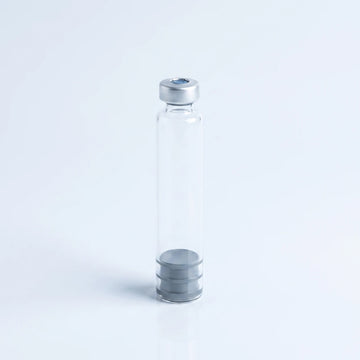
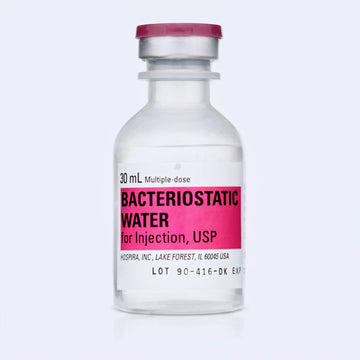
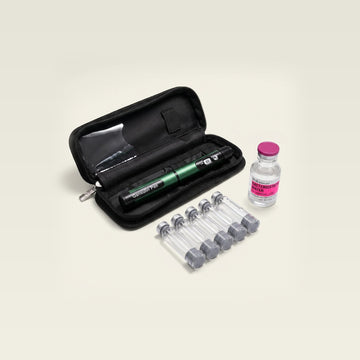
Reusable all-metal pens, standard 3 ml glass cartridges, and USP bacteriostatic water — the hardware and diluent the calculators assume.
BlendEdit the recipe in the DIY blend calculator below.
Repeat
repeat every days
Step-up (ramp)?A step-up ramp starts at a lower amount and increases over the cycle — for example weeks 1–4 at 0.25 mg, then weeks 5–8 at 0.5 mg. After the last step, entries continue at the final amount until the cycle ends.
Your cycle length is the total of these step weeks. To hold at the final amount longer, add a step with the weeks you want to stay there.
Times per day & notes?How many entries on each scheduled day (choose 3+ to enter your own number). Each entry has a time and an editable note that auto-fills from your settings and is added to every calendar event; type your own or press ↻ to reset. per day
Time and an editable note for each entry — notes auto-fill from your settings and are added to every calendar event. Type to write your own; press ↻ to reset.
Cycle length?How many weeks the schedule runs, or set a goal end date instead.
weeksor
Break after cycle?A scheduled off period after the cycle ends (0 = no break). Added as non-blocking calendar markers on the start day and the day the next cycle can start. weeks
Concentration (mixed)?Vial strength divided by the water you added: milligrams per millilitre after mixing.5.0 mg/ml
Draw per entry?How much to draw for one entry, shown in units and millilitres. With a step-up ramp this shows the range across your steps — see the per-step breakdown below.5 units
Entries this cycle?The total number of scheduled entries across the whole cycle.24
Total peptide used?The total amount of peptide the schedule uses over the cycle.6.0 mg
Vials needed for this cycle?How many vials the whole cycle requires, based on your vial strength.1
Left over from your supply?What remains from the vials you already have after the cycle ends.—
Waste per vial?How much of each mixed vial you would not use: the un-drawable remainder, plus anything that would sit past the ~28-day reconstituted window. This is per vial, so it stays the same however long your cycle runs. The goal is zero.—
Draw per entry—
Each draw contains—
Entries this cycle?The total scheduled entries across the whole cycle.—
Cartridges to make?How many cartridges the cycle needs, based on the draws per cartridge from your blend.—
:
1weeks atmg
Reference & how it works
Reconstitution is the arithmetic of turning a freeze-dried vial into a measured solution: add a known volume of bacteriostatic water to a known mass of compound, and the concentration is simply mass divided by volume. The reference tables below are fixed values you can check by hand or cite — expand any section.
How the peptide reconstitution calculator works
Enter the milligrams in your vial and the millilitres of water, and the calculator returns the concentration in mg/mL, the volume to draw for any target amount, and the equivalent on a U-100 syringe scale (where 1 unit = 0.01 mL). It also shows how many equal portions a vial holds. Everything runs in your browser; nothing is saved or sent anywhere.
Reconstitution concentration reference (mg/mL)
Each cell is the resulting concentration for a given vial mass and diluent volume, with the amount delivered per U-100 unit in parentheses (1 unit = 0.01 mL, 1 mg = 1000 mcg). Concentration = vial mg ÷ water mL.
Reconstitution concentration reference (mg/mL, with mcg per U-100 unit). Fluid-mixing arithmetic for laboratory reference; not a dosing table.
Vial mass ↓ / Water →
1 mL
2 mL
3 mL
5 mL
2 mg
2.0 (20)
1.0 (10)
0.67 (6.7)
0.4 (4)
5 mg
5.0 (50)
2.5 (25)
1.67 (16.7)
1.0 (10)
10 mg
10.0 (100)
5.0 (50)
3.33 (33.3)
2.0 (20)
15 mg
15.0 (150)
7.5 (75)
5.0 (50)
3.0 (30)
20 mg
20.0 (200)
10.0 (100)
6.67 (66.7)
4.0 (40)
30 mg
30.0 (300)
15.0 (150)
10.0 (100)
6.0 (60)
U-100 unit → mL → mg conversion reference
On a U-100 graduated syringe, 100 units = 1 mL, so 1 unit = 0.01 mL. The mg columns show how a stated concentration converts to mass per volume — measurement arithmetic, not dose guidance.
Unit-to-volume conversion for U-100 syringes, with mass at four example concentrations. mg = mL × concentration.
Units
mL
mg @1 mg/mL
mg @2.5 mg/mL
mg @5 mg/mL
mg @10 mg/mL
1
0.01
0.01
0.025
0.05
0.1
2
0.02
0.02
0.05
0.1
0.2
5
0.05
0.05
0.125
0.25
0.5
10
0.10
0.1
0.25
0.5
1.0
20
0.20
0.2
0.5
1.0
2.0
50
0.50
0.5
1.25
2.5
5.0
100
1.00
1.0
2.5
5.0
10.0
Per-compound reconstitution calculators
Compound-specific references with molecular data (formula, molecular weight, CAS) and a pre-scoped concentration matrix, for common research compounds:
How do you calculate peptide reconstitution concentration?
Concentration equals the milligrams of compound in the vial divided by the millilitres of bacteriostatic water you add. A 10 mg vial reconstituted with 2 mL of water is 10 ÷ 2 = 5 mg/mL. The calculator does this automatically and also converts it to mcg per U-100 unit.
What does 1 unit on a U-100 syringe equal in mL?
On a U-100 graduated syringe, 100 units = 1 mL, so 1 unit = 0.01 mL. The conversion reference table above lists common unit-to-mL-to-mg equivalents at several example concentrations.
How do I convert between mg and mcg?
1 mg = 1000 mcg. The calculator lets you enter a target in either mg or mcg and handles the conversion; the reference tables show mcg-per-unit so you can read a small amount without converting by hand.
How much bacteriostatic water should I add to a vial?
There is no single correct volume — it sets the concentration. More water gives a more dilute, easier-to-measure solution but a larger draw volume; less water gives a more concentrated solution and smaller draws. Some compounds dissolve more cleanly when more dilute. Use the concentration matrix above to see what each vial-and-water combination produces, then pick the concentration you want to work with. Choosing a preparation concentration is a solubility and handling decision.
What is mg/mL and why does it matter?
mg/mL (milligrams per millilitre) is the concentration — how much compound is dissolved in each millilitre of solution. It is the number that lets you translate any target amount into a volume or a number of syringe units, and it is the core output of the reconstitution calculator.
How many portions does one vial hold?
Divide the total mass in the vial by the target amount per portion. A 10 mg (10,000 mcg) vial at a 250 mcg target yields 40 equal portions. The calculator’s “draws per vial” output computes this for you, rounded down.
Is the calculator free, and is anything stored?
Yes — it is completely free, no sign-up, and it runs entirely in your browser. No inputs are saved, sent, or stored anywhere. The reference tables are static and can be checked by hand.
Is there a peptide cycle calculator?
Yes. The cycle and supply planner maps a research schedule across one or more compounds and returns the supply math — how many vials and cartridges a planned run needs, the reconstitution and resupply timing, and what is left over — with a one-click calendar export. It plans research supply and scheduling, not dosing; obtain any target amounts from a licensed provider.
All of the above is fluid-mixing arithmetic for laboratory and research reference only. It is not dosing, medical, or therapeutic guidance, and nothing here is intended for human or animal use.
preppinpeppers
Are you 21 or older?
This site sells laboratory hardware and provides research and educational reference only. Nothing here is for human or animal use, and it is not medical or dosing advice. You must be 21+ to enter.
Please read these Terms of Use and Disclaimer carefully. By using this website or purchasing from us, you agree to them.
1. Acceptance of these terms
By accessing preppinpeppers.com or buying any product from us, you agree to be bound by these Terms of Use and Disclaimer. If you do not agree, do not use this site or purchase from us.
2. Age requirement (21+)
You must be at least 21 years old to use this site or place an order. By using the site or purchasing, you represent and warrant that you are 21 years of age or older and legally able to enter into this agreement.
3. What we sell
Preppin Peppers sells laboratory reconstitution hardware and materials, including reusable pens, glass cartridges, and bacteriostatic water. We do not sell peptides or any substance intended for human or animal consumption.
4. Research and educational reference only
All content on this site, including the reference library, calculators, blog articles, and product information, is provided for research and educational reference only. It is not medical, health, veterinary, dosing, or compounding advice. It has not been evaluated by the U.S. Food and Drug Administration and is not intended to diagnose, treat, cure, or prevent any disease or condition, or for human or animal use.
5. Not professional advice
Nothing on this site is a substitute for advice from a licensed physician, pharmacist, veterinarian, or attorney. Consult a licensed professional before making any decision that could affect health or that involves legal or regulatory questions.
6. Your responsibility and legal compliance
You are solely responsible for how you use any product or information obtained from this site, and for complying with all laws, regulations, and rules that apply to you in your country, state, and locality. You represent that your access, purchase, and intended use are lawful where you are located.
7. Assumption of risk and limitation of liability
You use this site, its calculators and tools, and any products you purchase entirely at your own risk. To the fullest extent permitted by law, Preppin Peppers, its owners, and its affiliates disclaim all liability for any direct, indirect, incidental, special, or consequential loss or damage arising from your use of, or inability to use, the site, tools, information, or products.
8. No warranties
The site and all content are provided “as is” and “as available” without warranties of any kind, whether express or implied, including accuracy, completeness, merchantability, fitness for a particular purpose, or non-infringement. Reference figures such as concentrations, timelines, and regulatory statuses are illustrative and may be incomplete or out of date; verify anything important independently.
9. Intellectual property
All content on this site is owned by Preppin Peppers or its licensors and is protected by applicable law. You may not copy, reproduce, or redistribute it without our prior written permission.
10. Changes to these terms
We may update these Terms at any time by posting a revised version on this page. Your continued use of the site after changes are posted means you accept the revised Terms.
11. Contact
Questions about these Terms can be sent to us via our contact page.
These Terms are a general template and do not constitute legal advice. They should be reviewed and adapted by a licensed attorney for your specific business.
Ask the LabAnswers from our knowledge base · research & educational use only