Melatonin
Melatonin is a research reference compound and is not a peptide. Structural class: Indoleamine (N-acetyl-5-methoxytryptamine). Reported molecular weight: 232.28 Da. Listed for research and educational reference only.
| Also known as | N-Acetyl-5-methoxytryptamine, Pineal Indoleamine |
|---|---|
| Evidence level | Extensively Studied |
| Regulatory status | Research-only |
| Molecular weight | 232.28 Da |
| Chain length | Small molecule (not a peptide) |
| Class | Indoleamine (N-acetyl-5-methoxytryptamine) |
| Sequence | C13H16N2O2 (molecular formula, not a peptide sequence) |
| Notes | Indoleamine derived from tryptophan by way of serotonin, CAS 73-31-4 |
| Updated | 2026-07-31 |
"Melatonin peptide" is the term people search, but melatonin itself is not a peptide. It is a small indoleamine hormone made from the amino acid tryptophan, by way of serotonin and N-acetylserotonin, and it is released mainly by the pineal gland on a cycle tied to ambient light and darkness — not a chain of amino acids linked by peptide bonds the way an actual peptide is.
| Attribute | Melatonin | A peptide |
|---|---|---|
| Chemical class | Indoleamine hormone | Chain of amino acids |
| Built from | Tryptophan, via serotonin | Individual amino acids in sequence |
| Main natural source | Pineal gland | Varies by peptide |
What it is
Melatonin (N-acetyl-5-methoxytryptamine) is an indoleamine hormone, not a peptide, despite the "melatonin peptide" label used across research catalogs. The label persists because catalogs often group short-chain and small-molecule research compounds under a single "peptide" category for consistency, not because melatonin meets the chemical definition. It is synthesized from tryptophan via serotonin, produced primarily by the pineal gland in a pattern tied to the light–dark cycle, and is chemically a small, lipid-soluble molecule with no amino acid chain, peptide bonds, or terminal modification sites.
This matters for anyone standardizing reconstitution notes across a research panel: peptide hormones such as tirzepatide or GHK-Cu are built from linked amino acid residues and can behave differently once dissolved, even when prepared with identical hardware. All material on this page is provided strictly for laboratory research reference.
Research context
Melatonin is not a peptide — it is a small, tryptophan-derived hormone produced by the pineal gland in response to darkness, though search and supplier listings often group it alongside peptide research materials, partly because it is reconstituted and stored the same way. In the literature it is studied mainly in circadian-rhythm research: light-exposure, shift-work, and travel-related sleep-cycle studies, since it is the body's primary day–night signaling molecule. A smaller body of work covers antioxidant and aging research.
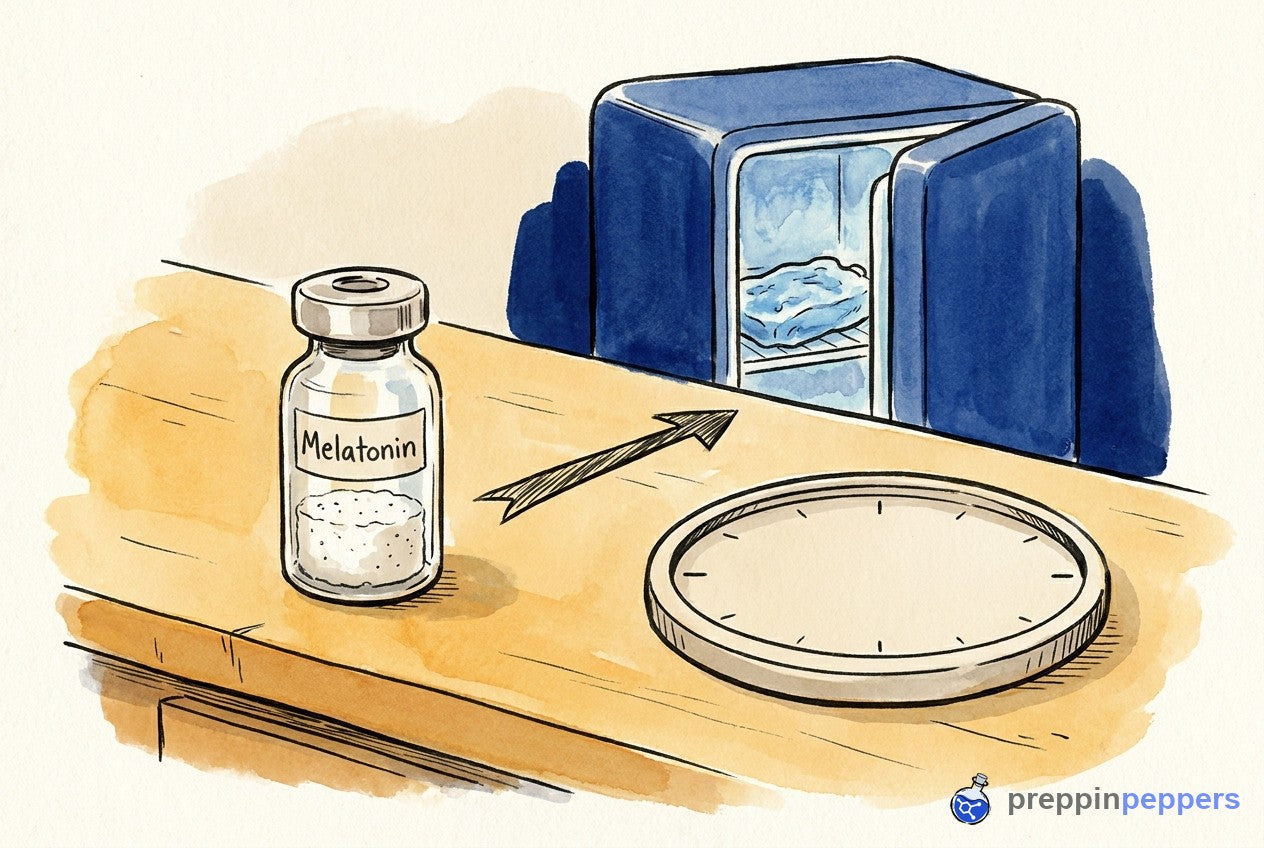
Because melatonin is sold over the counter in the United States, product quality varies more than for a regulated drug: independent testing has repeatedly found supplement content differing substantially from the label — a variance worth checking against documentation before, not after, reconstituting a reference sample for research use.
Status
- United States: Melatonin is sold as a dietary supplement under DSHEA, not as an FDA-approved drug. It has not gone through FDA review for any indicated use.
- Elsewhere: The US supplement classification does not carry over globally. Several countries, including much of the EU and the UK, classify melatonin as prescription-only. Legal status depends on jurisdiction, not on any property of the compound itself.
- Sport status: Melatonin is not specifically named on the current WADA Prohibited List, which is revised annually. Athletes subject to testing should independently confirm current status with their governing body before assuming any substance is permitted — list entries and interpretations change between versions and vary by federation.
Reconstitution and handling
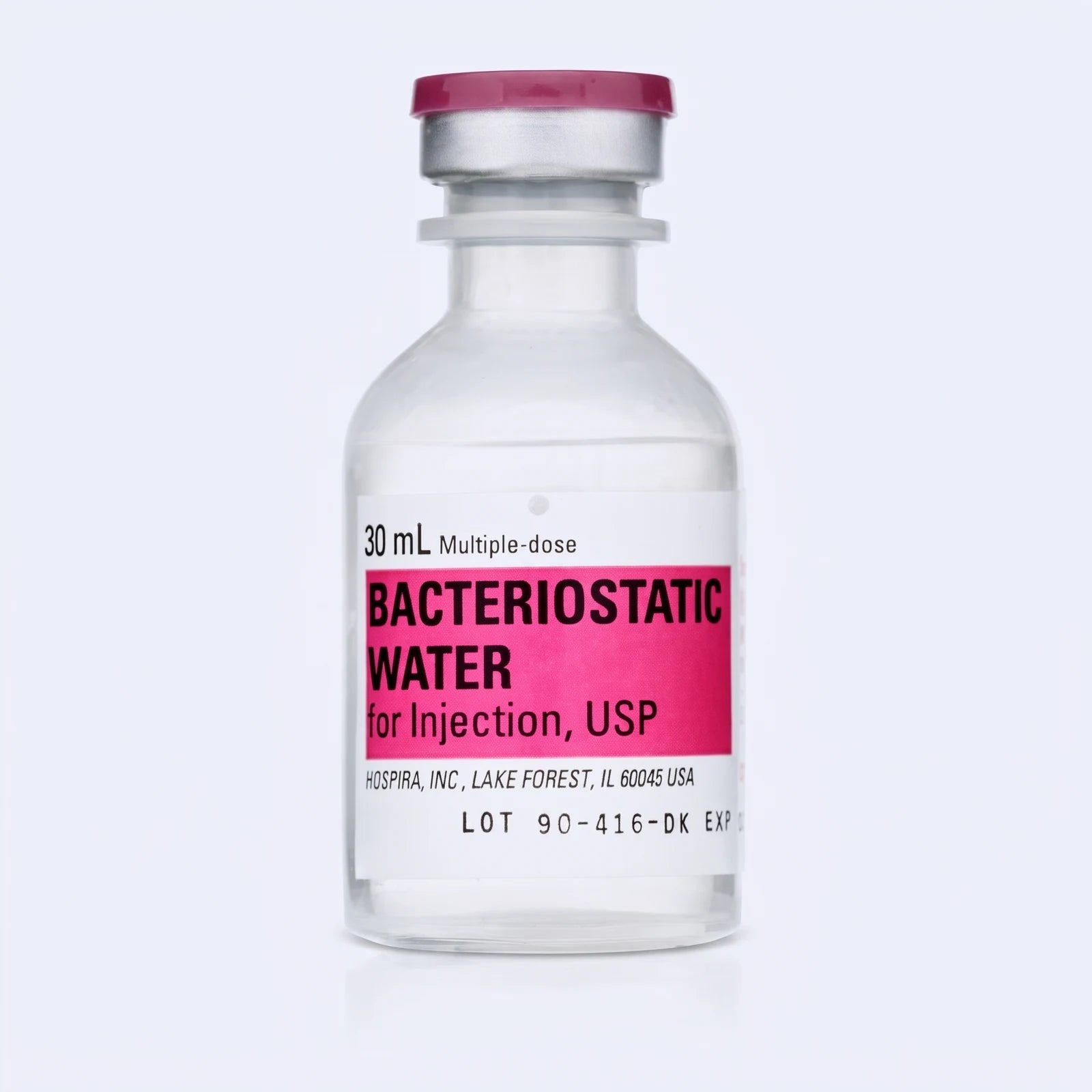
Concentration is milligrams of melatonin peptide in the vial divided by millilitres of bacteriostatic water added, which we stock in 30 ml vials for this step. There's no single correct concentration — it depends on solubility and the draw size wanted; if the mix doesn't go fully clear, add more water. Use the reconstitution calculator to see concentration, draw size, and portions per vial for any volume you choose.
Benzyl alcohol in bacteriostatic water is a preservative, not a stabilizer for the peptide itself: it lets a vial be punctured repeatedly instead of once. It keeps the solution sterile across draws — it doesn't extend shelf life, boost potency, or otherwise change how the peptide behaves once mixed.
Handling after mixing follows a short checklist:
- Refrigerate reconstituted vials at 2–8 °C, out of light.
- Wipe the stopper with alcohol before each puncture.
- Label every vial with the mix date.
- Discard if color or clarity shifts after mixing — cloudiness, or a tinted mix turning clear — rather than guessing at what changed.
Status in sport
Melatonin does not currently appear on the World Anti-Doping Agency (WADA) Prohibited List. That list is republished every year and can add or remove substances without individual notice, so a substance's status can change between one year's list and the next without warning.
- Confirm current status directly at wada-ama.org against the current year's list — not this page, and not any other third-party summary.
- Sport federations can apply internal rules that differ from WADA's list, so check with the relevant governing body if a federation code applies to you.
- This section is a reference summary only, not legal or compliance advice, and does not track any anti-doping code beyond WADA's own published list.
List revisions take effect January 1 each year — a substance absent this year can be added in a future revision.
Frequently asked questions
Is melatonin a peptide?
No. It is an indoleamine hormone synthesised from tryptophan via serotonin. It is included in this reference library as a related research compound.
Is melatonin FDA-approved?
Not as a drug in the United States, where it is sold as a dietary supplement. Several other countries, including much of the EU and the UK, regulate it as prescription-only.
Why does melatonin content vary between products?
Because it is regulated as a dietary supplement in the US rather than as a drug, independent analyses have repeatedly found actual content differing substantially from what the label states.
What the research community gets wrong about Melatonin
- Supplement status is not a quality guarantee. Dietary-supplement regulation does not require the pre-market content verification a drug approval does, and independent testing has repeatedly found label mismatches on melatonin products sold as supplements.
- "Third-party tested" is not a certificate of analysis, and PreppinPeppers doesn't issue one - we sell reconstitution hardware, not the compound. Purity and COA questions belong to whichever lab supplied your material. A real COA names the specific compound, states measured purity against a stated method (typically HPLC), and lists a batch or lot number that matches what's on the vial in hand - not a generic template reused across batches. No batch-matched number to check means the purity claim is unverified, regardless of what the label or seller says.
- A reconstituted vial does not stay good forever, and the diluent matters. Compounds in solution degrade over time, and rough handling (shaking hard enough to foam) accelerates it. Bacteriostatic diluents commonly contain benzyl alcohol as a preservative, which changes the vial's stability and handling profile compared with sterile water - factor that into how you store it. Note the reconstitution date and follow your protocol's storage guidance.
Sources
- NCBI PubChem CID 896: Melatonin (C13H16N2O2)
- NIH NCCIH : Melatonin: What You Need To Know
- Fatemeh et al., J Neurol 2022: Effect of melatonin supplementation on sleep quality: a systematic review and meta-analysis of randomized controlled trials
- Wurtman, J Neural Transm Suppl 1986: Melatonin in humans
- Tang et al., Crit Care Med 2025: Melatonin Use in the ICU: A Systematic Review and Meta-Analysis
- UniProtKB/Swiss-Prot P48039: Melatonin receptor type 1A (MTNR1A, Homo sapiens), UniProt release 2026-03
✔ Reviewed by Bryan Le, PharmD, RPh
Bryan is a licensed pharmacist (Doctor of Pharmacy, Registered Pharmacist). Reconstituting lyophilized preparations is core pharmacy practice, so he reviews The Lab’s content for technical accuracy and to keep it within a research-and-education scope, with no medical or dosing advice. View profile on LinkedIn.
Related entries in the index
For research and educational reference only. Not for human or veterinary use.