Retatrutide Reconstitution Calculator

Use this free calculator to reconstitute Retatrutide for research: enter the milligrams in your vial and the millilitres of bacteriostatic water, and it returns the concentration in mg/mL, the volume to draw for any target, and the U-100 unit equivalent. The reference data and concentration matrix below are specific to Retatrutide and can be checked by hand or cited.

Retatrutide reference data

Class Triple GIP / GLP-1 / glucagon receptor agonist peptide (~39-residue, fatty-acyl-modified)
Molecular formula C221H342N46O68
Molecular weight 4731.33 g/mol
CAS 2381089-83-2
PubChem CID Not indexed in PubChem (see notes)
Typical vial sizes 5 mg / 10 mg / 15 mg
Storage Lyophilized: -20 C sealed and desiccated, out of light. Reconstituted: 2-8 C, protect from light; typical ~4-week refrigerated working window.

Not indexed in PubChem: formula, MW, and CAS are from manufacturer/supplier technical data. Treat the MW as approximate and verify against your lot’s certificate of analysis (COA).

Concentration matrix for Retatrutide

Each cell = concentration for that vial mass and diluent volume, with mcg per U-100 unit and nmol/mL (from MW 4731.33). Concentration = vial mg ÷ water mL.

Vial ↓ / Water → 1 mL 2 mL 3 mL 5 mL
5 mg 5.00 mg/mL
50.0 mcg/unit · 1057 nmol/mL
2.50 mg/mL
25.0 mcg/unit · 528 nmol/mL
1.67 mg/mL
16.7 mcg/unit · 352 nmol/mL
1.00 mg/mL
10.0 mcg/unit · 211 nmol/mL
10 mg 10.00 mg/mL
100.0 mcg/unit · 2114 nmol/mL
5.00 mg/mL
50.0 mcg/unit · 1057 nmol/mL
3.33 mg/mL
33.3 mcg/unit · 705 nmol/mL
2.00 mg/mL
20.0 mcg/unit · 423 nmol/mL
15 mg 15.00 mg/mL
150.0 mcg/unit · 3170 nmol/mL
7.50 mg/mL
75.0 mcg/unit · 1585 nmol/mL
5.00 mg/mL
50.0 mcg/unit · 1057 nmol/mL
3.00 mg/mL
30.0 mcg/unit · 634 nmol/mL

Handling & notes

Supplied as a lyophilized powder. Retatrutide is a fatty-acyl-modified peptide, and like other long-acting acylated peptides in this class it can take a short time — often a couple of minutes of gentle rolling — to dissolve fully rather than clearing on contact. A dense, compact freeze-dried cake hydrates slowly and may look clumped or gel-like at first; that is the cake dissolving, not a failed reconstitution.

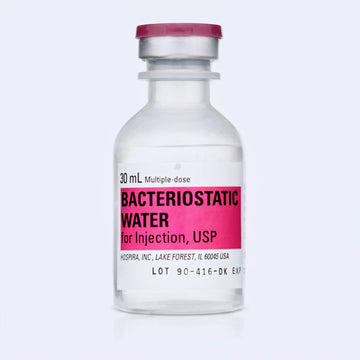
Technique. Direct the diluent down the inside wall of the vial rather than forcing it in fast: a hard stream plus shaking creates foam, and foam stresses the peptide. Roll or swirl the vial gently between the fingers and give it the time it needs. Bacteriostatic water is generally preferred over plain sterile water here because its 0.9% benzyl alcohol allows repeated draws from one vial across the refrigerated storage window.

What a failed solution looks like. Persistent cloudiness, a color change, or visible floating bits point to a real problem — clumping, breakdown, a temperature or pH issue, or contamination — and the solution should be discarded rather than filtered or re-warmed.

Light sensitivity. Retatrutide is light-sensitive in both powder and solution form, so keep the vial in its carton or otherwise shielded rather than sitting on an open shelf. Lyophilized: -20 C, sealed and desiccated, out of light. Reconstituted: 2-8 C, protected from light, typical working window about four weeks.

On the PubChem row. Retatrutide has no PubChem CID at the time of writing, which is why that field reads "not indexed" rather than carrying a number. The molecular formula and 4,731.33 g/mol molecular weight above are what the molar column on this page is computed from.

Worked example: Retatrutide

A 10 mg vial reconstituted with 2 mL of bacteriostatic water:

  • Concentration: 10 mg ÷ 2 mL = 5.00 mg/mL
  • Per U-100 unit (1 unit = 0.01 mL): 5.00 mg/mL × 0.01 mL = 0.05 mg = 50 mcg per unit
  • Molarity: (5.00 ÷ 4,731.33) × 1,000,000 = 1,057 nmol/mL
  • Total yield: 2.00 mL of solution = 200 U-100 units in the vial

A 15 mg vial in 3 mL lands on the same 5.00 mg/mL and the same 50 mcg per unit, with 300 units in the vial instead of 200 — the ratio of milligrams to millilitres is what sets concentration, not either number alone.

Retatrutide reconstitution FAQ

Why does retatrutide take longer to dissolve than smaller peptides?
It is a roughly 39-residue, fatty-acyl-modified peptide, and the acyl chain plus a dense freeze-dried cake slow hydration. A couple of minutes of gentle rolling is normal, and an initially clumped or gel-like appearance usually resolves as the cake dissolves.

Why is the PubChem CID field empty on this page?
Retatrutide is not currently indexed in PubChem, so there is no CID to cite. The molecular formula C221H342N46O68 and molecular weight 4,731.33 g/mol are what every molar figure on this page is derived from.

Does retatrutide need to be protected from light?
Yes. It is light-sensitive in both lyophilized and reconstituted form, so the vial should be kept in its carton or another opaque enclosure rather than left exposed on a bench or shelf.

Bacteriostatic water or sterile water?
Bacteriostatic water is generally preferred because the 0.9% benzyl alcohol it contains permits repeated entry into the same vial across the refrigerated window. Plain sterile water carries no preservative and is single-entry. The concentration arithmetic is identical either way.

What does cloudiness after reconstitution indicate?
Cloudiness that does not clear, a color change, or visible floating material indicates a problem such as clumping, degradation, a temperature or pH issue, or contamination. Such a solution should be discarded.

All values here are physical-chemistry reference data and fluid-mixing arithmetic for laboratory and research use only. Not dosing, medical, or therapeutic guidance; not intended for human or animal use. Products are sold for research, educational, and demonstration use only.

For research and educational use only. Preppin Peppers sells laboratory hardware and materials (reconstitution pens, cartridges, and bacteriostatic water), not peptides or anything for consumption. All content here, including the calculators, is educational and is not medical, veterinary, dosing, or compounding advice. It has not been evaluated by the FDA and is not intended to diagnose, treat, cure, or prevent any condition, or for human or animal use. You are responsible for complying with your local laws, and use is at your own risk.

Peptide Reconstitution Calculator

Enter your vial and the bacteriostatic (or sterile) water you added, then see exactly how many units to draw. Toggle mg or mcg, and hover any ? for help.

Concentration?How concentrated the mixed solution is: milligrams of peptide per millilitre.5.0 mg/ml
Volume to draw?The millilitres you would draw to get your target amount.0.05 ml
Draw on a U-100 scale?The same volume in units on a standard U-100 syringe or pen. 1 unit = 0.01 ml.5 units
Per unit?How much peptide one unit on a U-100 syringe delivers at this concentration.50 mcg
Draws per vial?How many target-size draws one vial holds, rounded down.10

1 unit on a U-100 syringe or pen = 0.01 ml. 1 mg = 1000 mcg. Illustrative fluid math for research reconstitution.

How to reconstitute your vial

Reconstitution is adding liquid, almost always bacteriostatic water, to a freeze-dried (lyophilized) peptide so it can be measured accurately.

  1. Clean both stoppers. Wipe the bacteriostatic water vial and the peptide vial with an alcohol swab before puncturing either one.
  2. Draw the water first. Pull the full amount of bacteriostatic water into the syringe before adding anything to the peptide vial.
  3. Add the water slowly. Aim the stream down the inside wall of the vial instead of blasting the powder directly.
  4. Swirl gently. Roll or swirl the vial until the powder dissolves fully. Never shake it hard.
  5. Refrigerate after mixing. Keep the reconstituted vial cold and away from light unless the label says otherwise.

Get your target amount from a licensed provider. This calculator handles the arithmetic, not the protocol.

How the math works

The peptide dissolves evenly in the water you add, so the concentration is simply the milligrams in the vial divided by the millilitres of water. U-100 syringes are marked in units, and 100 units equal 1 ml. The three formulas this calculator uses:

  • Concentration (mg/ml) = vial mg ÷ water ml
  • Units to draw = (target mcg ÷ (vial mg × 1000)) × water ml × 100
  • Draws per vial = (vial mg × 1000) ÷ target mcg, rounded down

Example: a 5 mg vial reconstituted with 2 ml of bacteriostatic water is 2.5 mg/ml, or 25 mcg per unit. A 250 mcg target is 10 units on a U-100 syringe (0.10 ml), and the vial holds 20 draws.

Peptide Cycle Calculator & Supply Planner

Add a card per peptide with its amount, schedule, and cycle length, then export to your calendar. Hover any ? for help.

Research supply & scheduling math only. This peptide cycle calculator maps a research schedule and its resupply math — the vials and cartridges a planned run needs, reconstitution timing, and what is left over. It is not a dosing schedule, a protocol, or medical or veterinary advice. Obtain any target amounts and administration guidance from a licensed provider.
Imports into Google Calendar, Apple Calendar and Outlook.

Generated in your browser and never stored. For research planning and supply estimation only, not dosing guidance.

DIY Peptide Blend Calculator

Mixing in one cartridge? Combining peptides is a stability question, not just a volume one. Some stay stable together, others degrade faster, and any blend shortens the beyond-use window. If compatibility is unknown, reconstitute separately or keep short-dated blends cold. This tool handles the volumes once you have decided what can share a cartridge.

Combine peptides into one cartridge and see the draw for each. Hover any ? for help.

Solution in cartridge?The combined volume of the reconstituted solutions you draw into the cartridge.—
Top-up water?Plain bacteriostatic water added last when Fill cartridge is on. With no top-up this shows the spare room left in the cartridge.—
Each draw?The volume of one draw in U-100 units and millilitres. With no top-up it is the blended solution divided by draws; with Fill cartridge it is the cartridge size divided by draws.—
Each draw contains—

Assumes each peptide dissolves fully and mixes evenly. Shelf life varies by peptide and handling; research planning math only, not dosing, compounding, or storage guidance. Confirm your protocol and storage with a licensed provider.

Pairs with our hardware

Everything these tools are built around

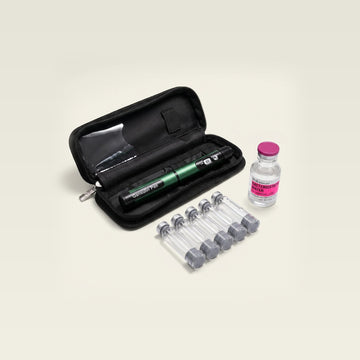
Reusable all-metal pens, standard 3 ml glass cartridges, and USP bacteriostatic water — the hardware and diluent the calculators assume.