The Lab

Reconstitution guides, a growing peptide reference, and bench-ready calculators. For research and educational reference only.

Injection Pen Basics for the Bench and How Cartridges Work
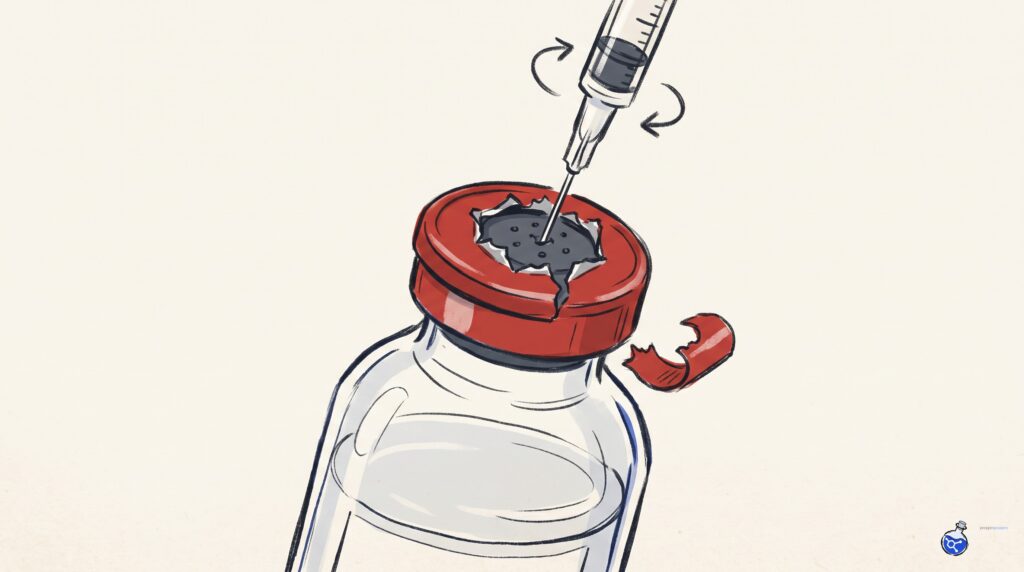
Quick answer: An injection pen is a hand-held, cartridge-based device that pushes a plunger forward in set steps; at the bench, matching pen to cartridge plunger height decides whether the unit scale reads true. Key takeaways All four PreppinPeppers pens are built for the 11 mm long plunger, and plunger height decides whether the unit scale reads true. The plunger is visible and measurable from outside on both clear and amber 3 ml cartridges. For example, 3 ml / 300 units = 0.01 ml per unit on the scale, but... Read more...
Bacteriostatic Water for Peptides Explained for the Bench
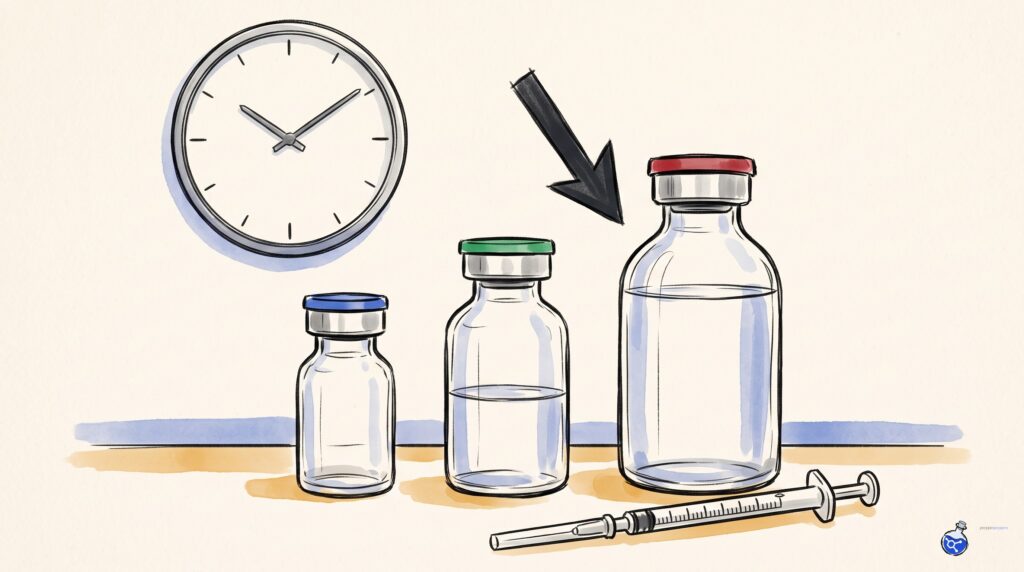
Quick answer: Bacteriostatic water is sterile water with benzyl alcohol added as a preservative, sold in multiple-dose vials; sterile water has no preservative and comes in single-dose containers. Key takeaways... Read more...
Bacteriostatic water vial sizes: 3 mL vs 10 mL vs 30 mL
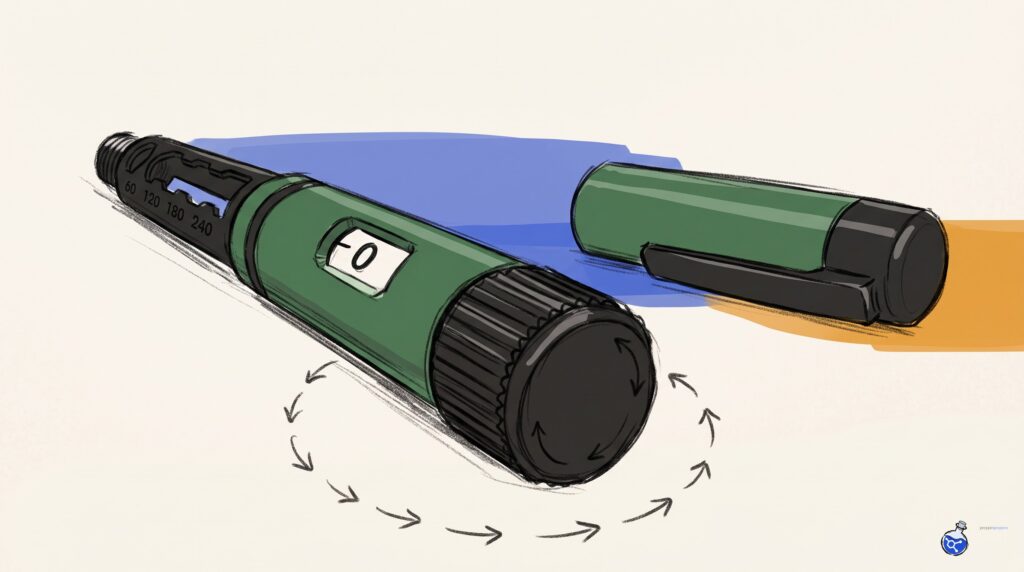
Quick answer: Buy the smallest vial that covers the water you will draw in the 28 days after you first puncture it. For one reconstitution at a time that is... Read more...
Click Dial vs Auto Dispense Reconstitution Pen Compared
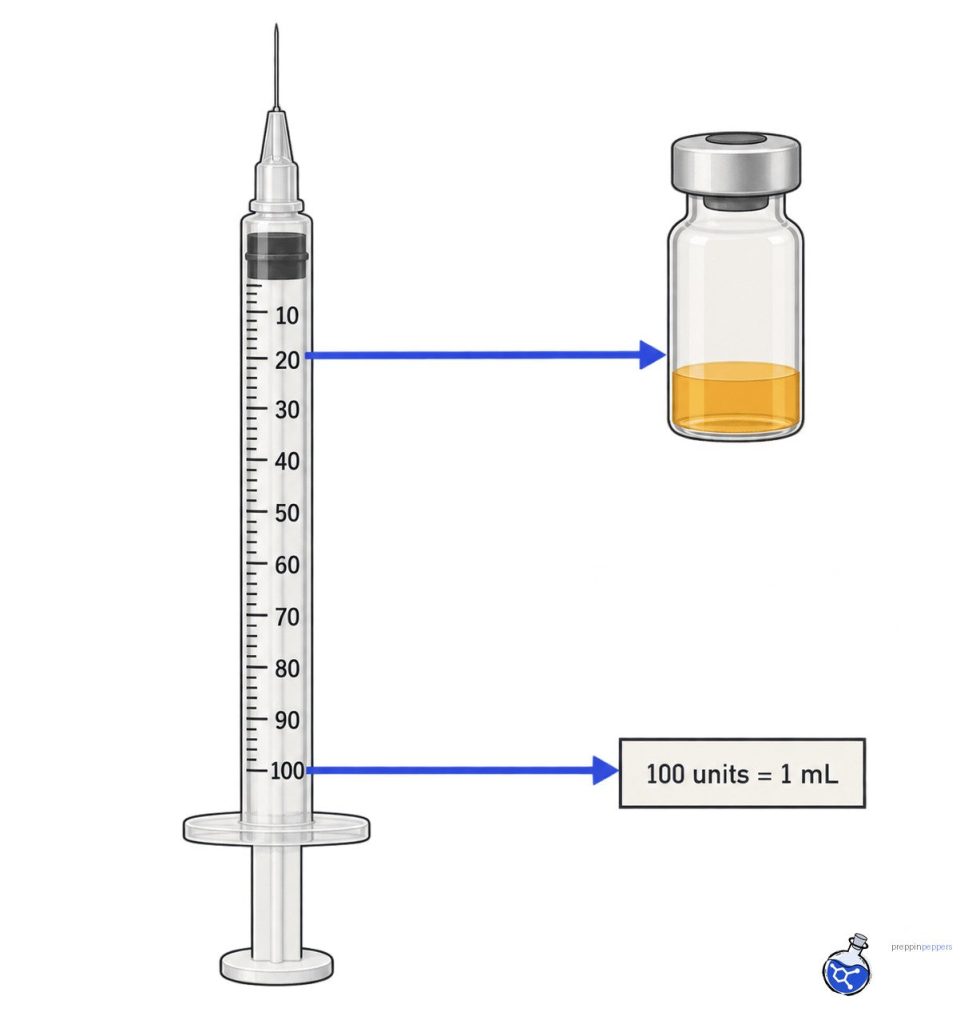
Quick answer: Click dial and auto dispense pens differ mainly in how a volume is set: a click dial pen meters it by counting audible dial clicks, one click per... Read more...
U-100 insulin syringe units to mL, math that wastes vials
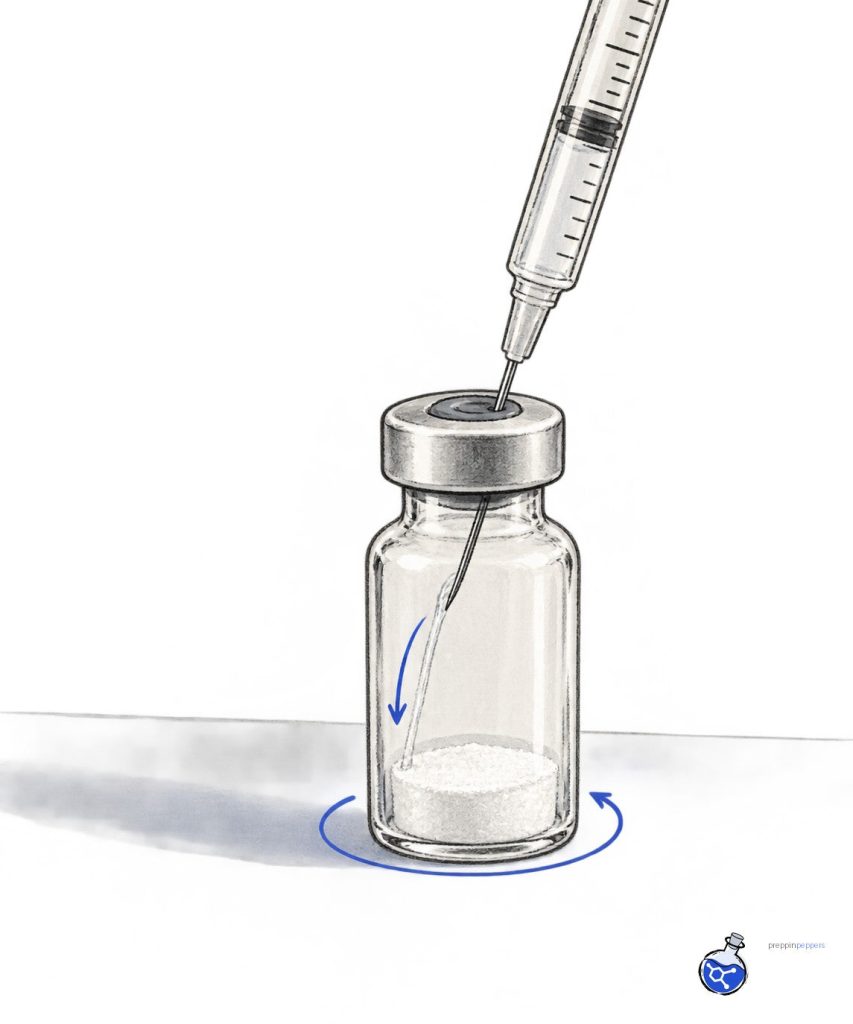
A U-100 insulin syringe is calibrated to 100 units per mL, so 1 unit equals 0.01 mL; multiply units by 0.01 for mL, or mL by 100 for units. Read more...
How to add bacteriostatic water to a peptide vial safely
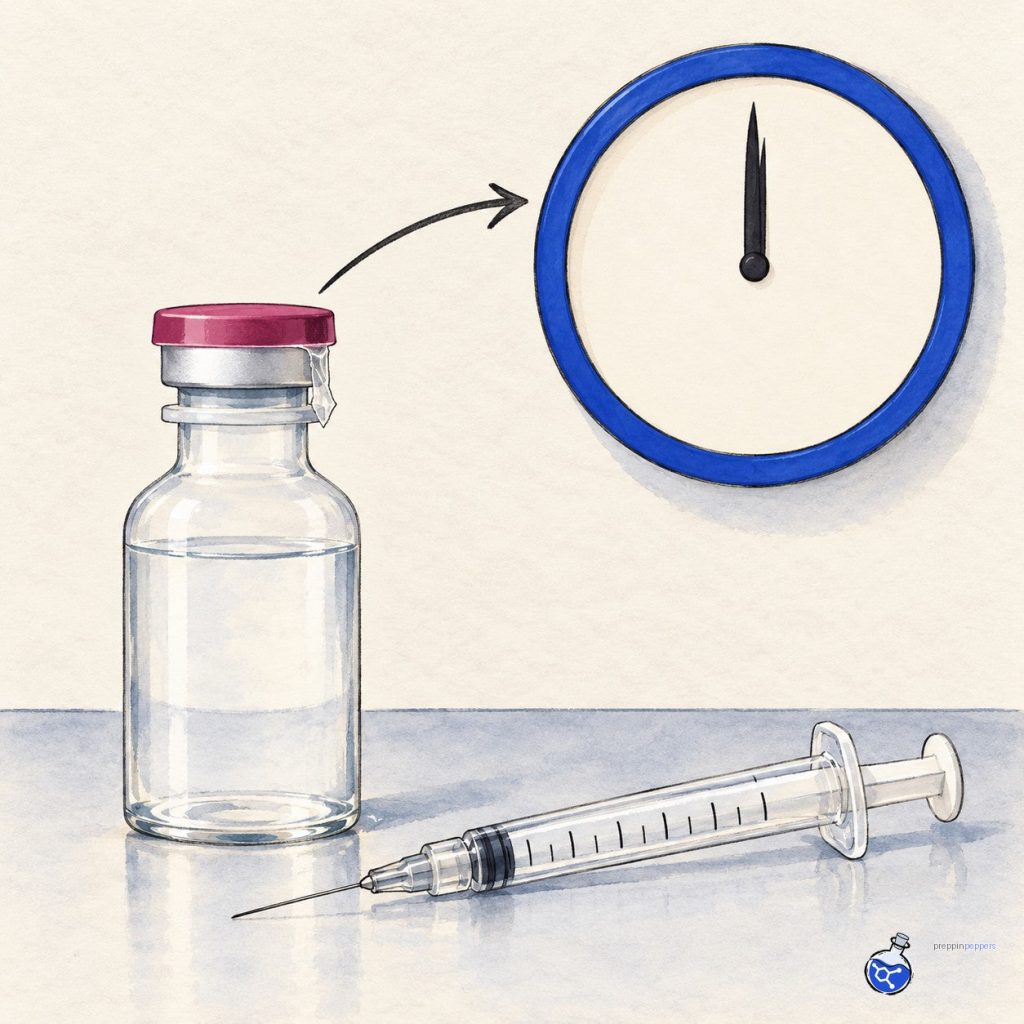
To add bacteriostatic water to a peptide vial, draw the water into a syringe and inject it slowly against the inside glass wall of the vial, then swirl (never shake)... Read more...
What Is Bacteriostatic Water? Why Your Vial Has a Clock
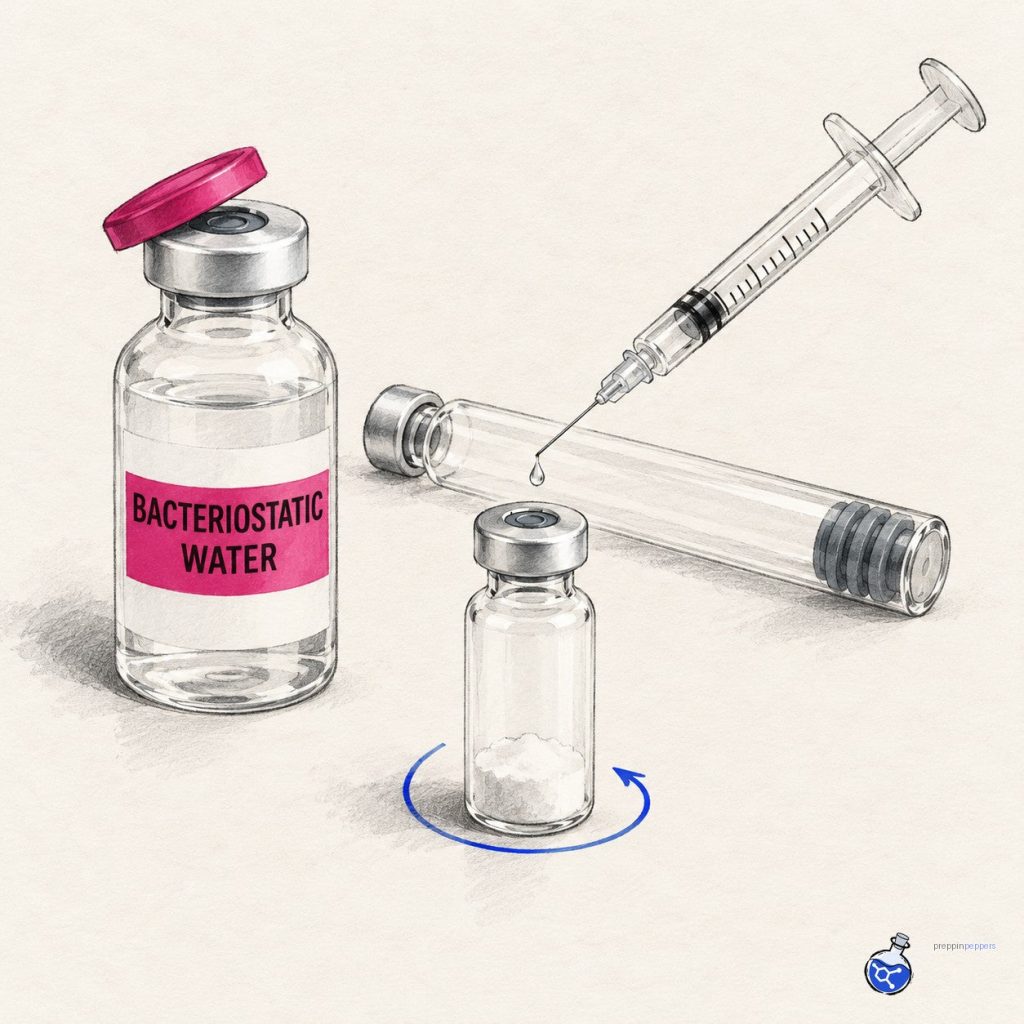
Bacteriostatic water is sterile water for injection with 0.9% or 1.1% benzyl alcohol added as a preservative, which lets a vial be withdrawn from more than once instead of discarded... Read more...
How to reconstitute tesamorelin without wasting your vial
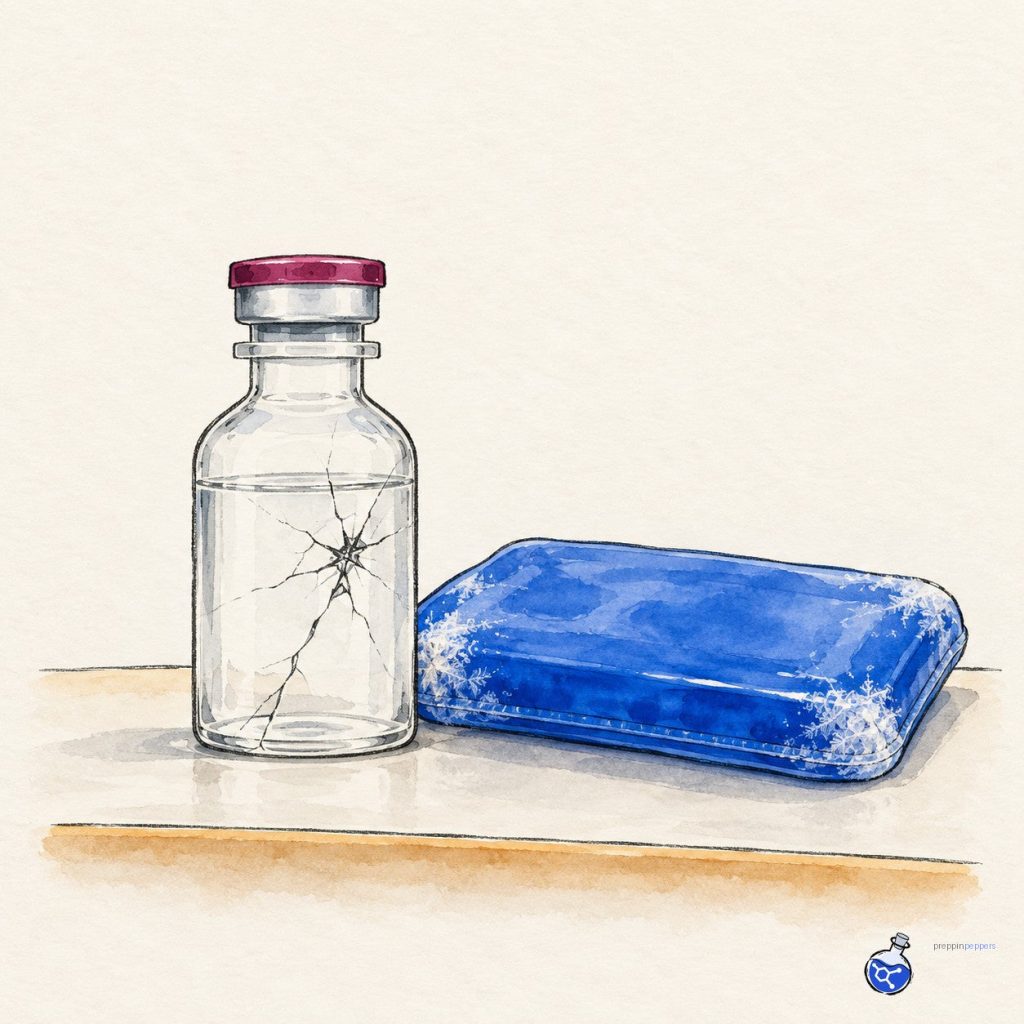
To reconstitute tesamorelin, add the labeled diluent to the powder, mix by gentle rolling or swirling (never shaking), confirm the solution is clear, then use it immediately. Read more...
Bacteriostatic Water: The Complete Research Guide
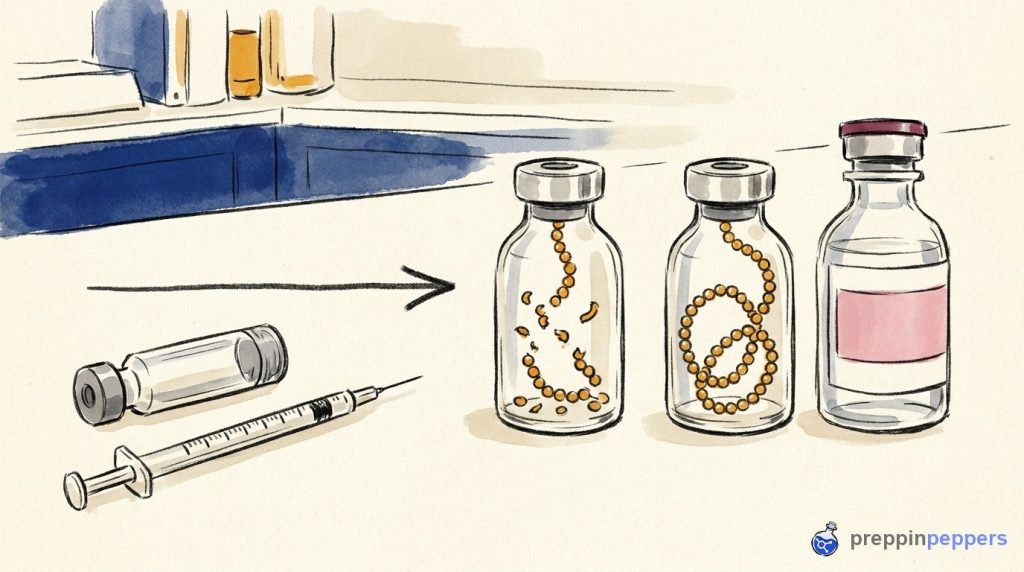
Quick answer: Bacteriostatic water is sterile water for injection with 0.9% benzyl alcohol added as a preservative. Because the preservative inhibits microbial growth, one multi-dose vial can be punctured repeatedly... Read more...
The cartridge transfer mistake that degrades your peptide
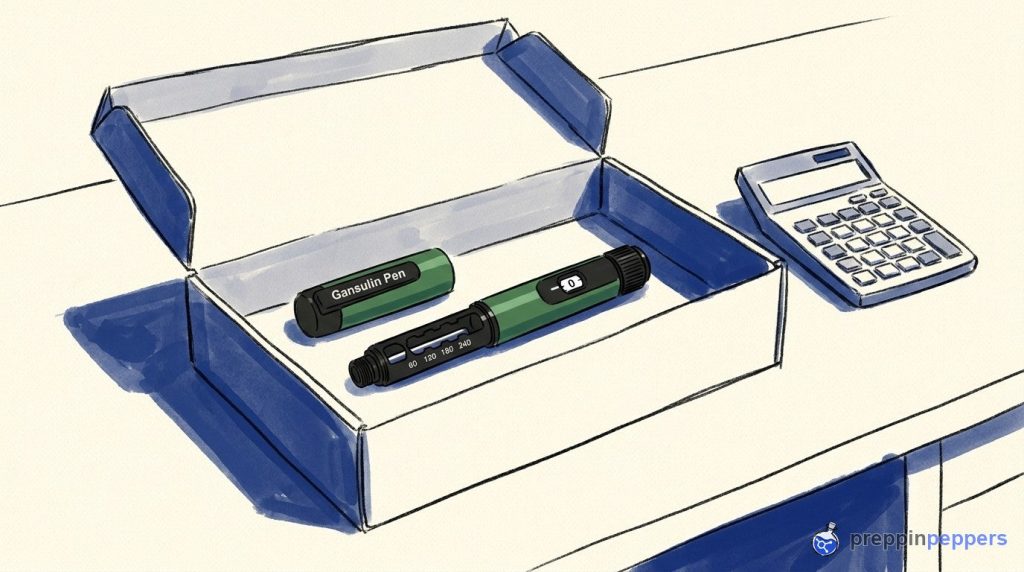
Vial-to-cartridge transfer is the bench step where reconstituted research peptide is drawn from a glass vial with a syringe and needle and pushed through a rubber septum into a 3... Read more...
Pen hardware pack sizes: what the bigger pack really saves
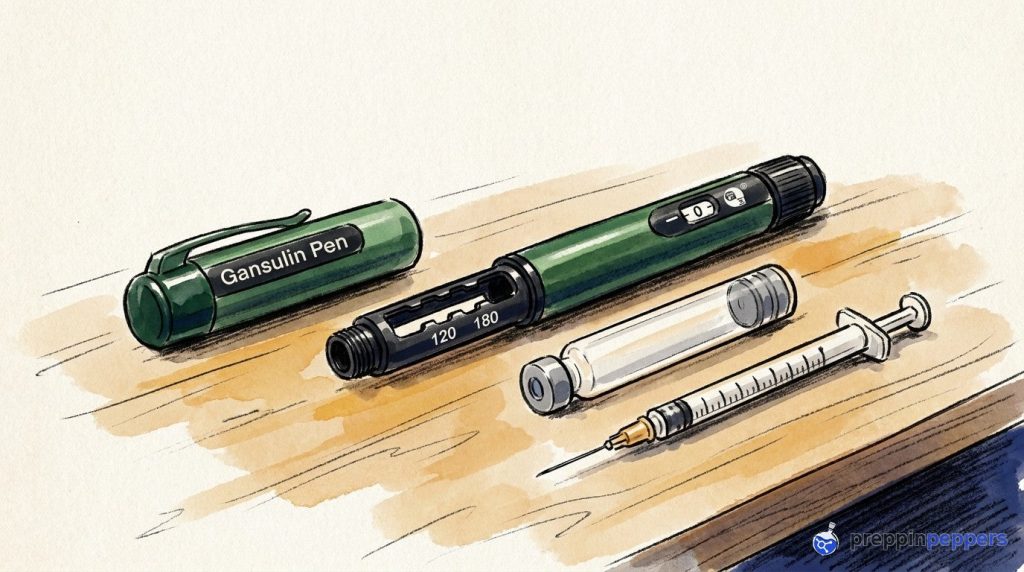
Pen hardware pack sizes describe how reusable-pen supplies are priced on a per-unit ladder: every pen, glass cartridge and bacteriostatic water vial carries a single-unit price, and each pack size... Read more...
Reusable Auto-Injector Pens vs. Click-Dial Pens: What Actually Matters on the Bench
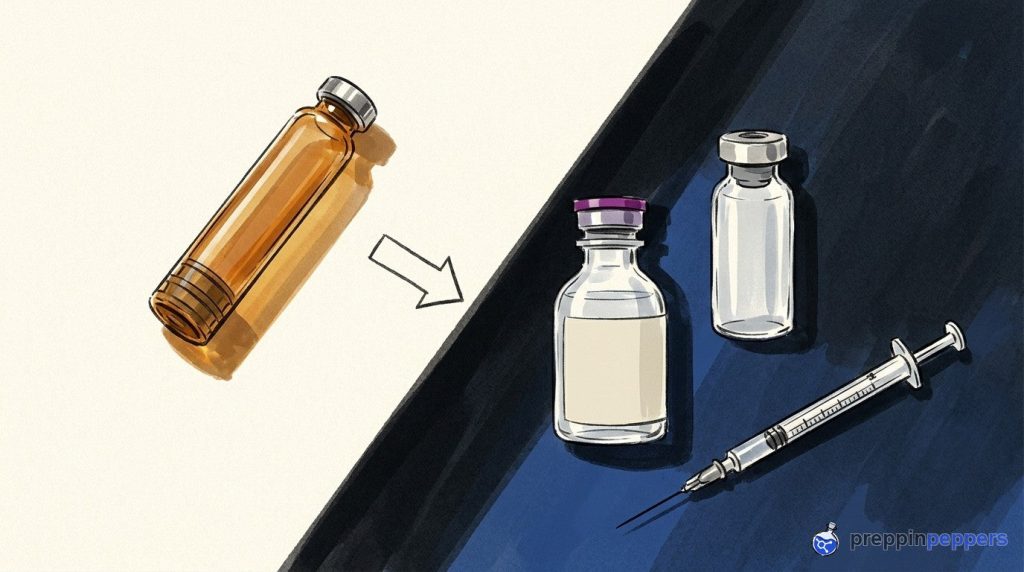
Spring-assisted auto-dispense pens and manual click-dial pens meter volume identically — the difference is delivery. How the two reusable mechanisms compare as bench hardware. Read more...
Amber vs Clear Glass Cartridges: When Light Protection Matters
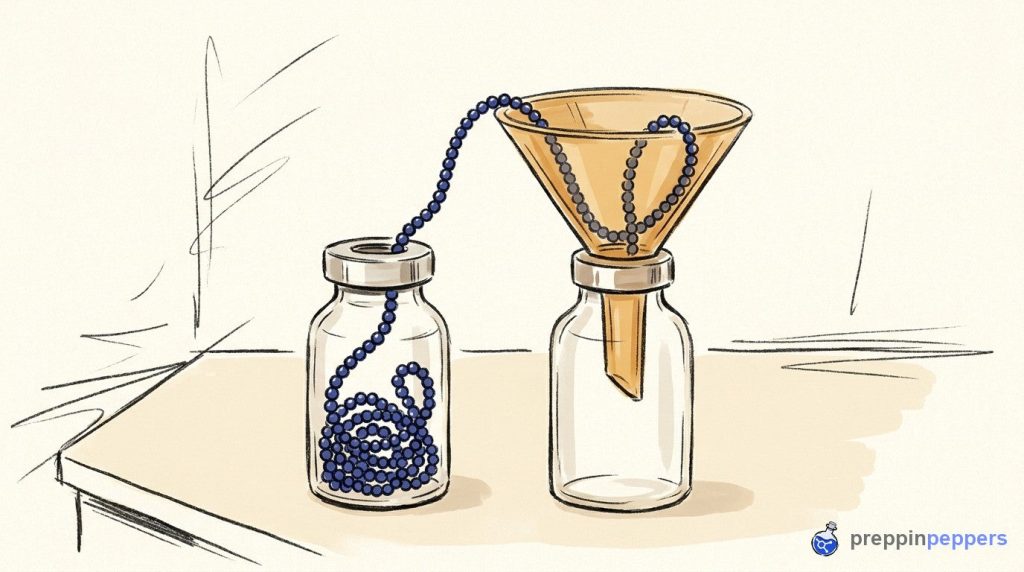
Amber and clear 3 ml cartridges are the same standard format - the difference is light. What amber glass blocks, when it matters, and when clear is the better pick. Read more...
Why transferring your peptide can waste half the vial
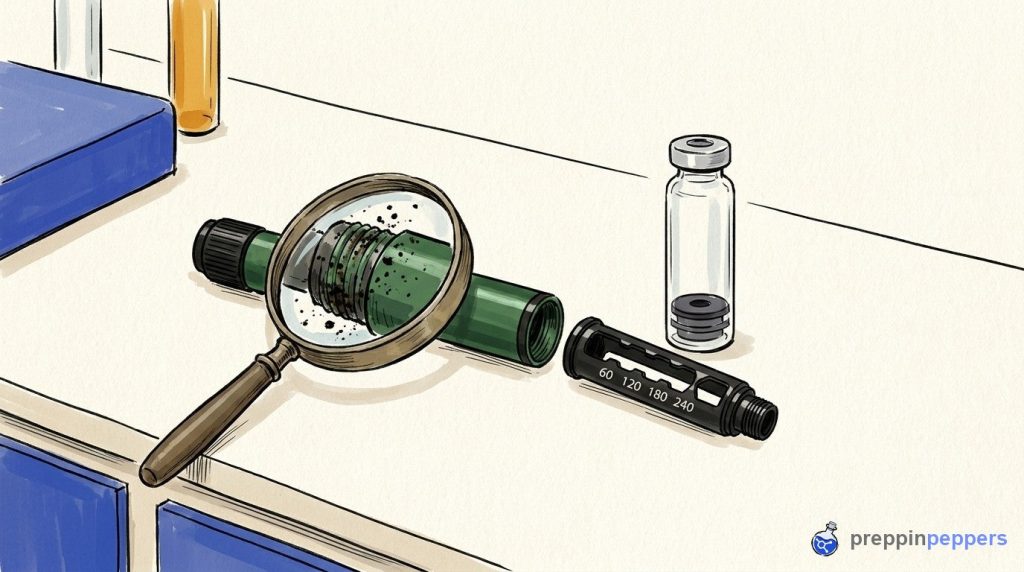
A vial-to-cartridge transfer is the process of drawing reconstituted peptide solution out of its mixing vial with a sterile syringe and pushing that measured volume into a 3 ml glass... Read more...
Why a dirty pen barrel ruins your next cartridge swap
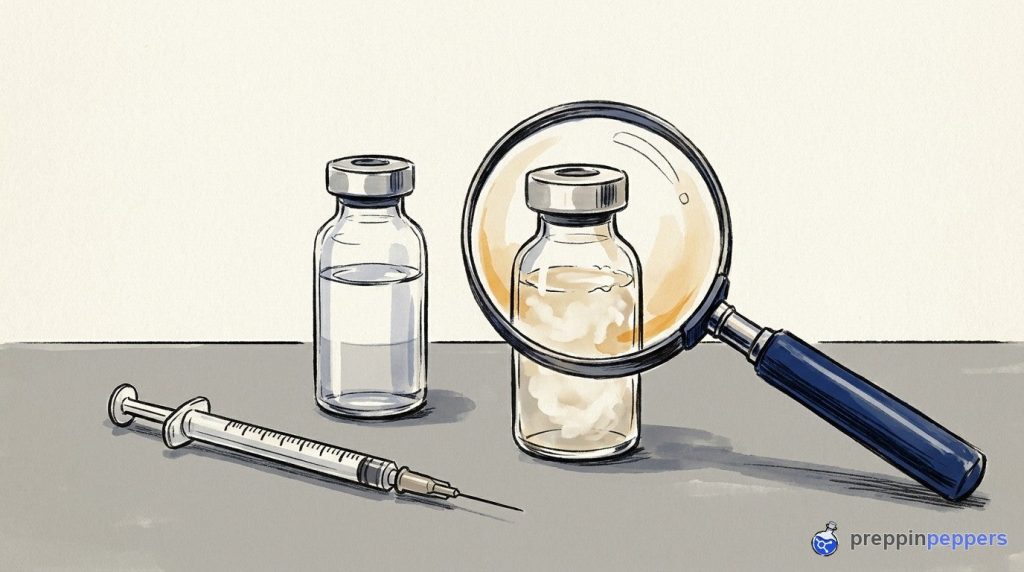
A dirty pen barrel is a reconstitution pen whose internal metal seat, threads, and recessed surfaces retain residual peptide solution and microbial contamination from the cartridge just removed. For research... Read more...
When Your Peptide Vial Turns Cloudy: Fixing Reconstitution Messes
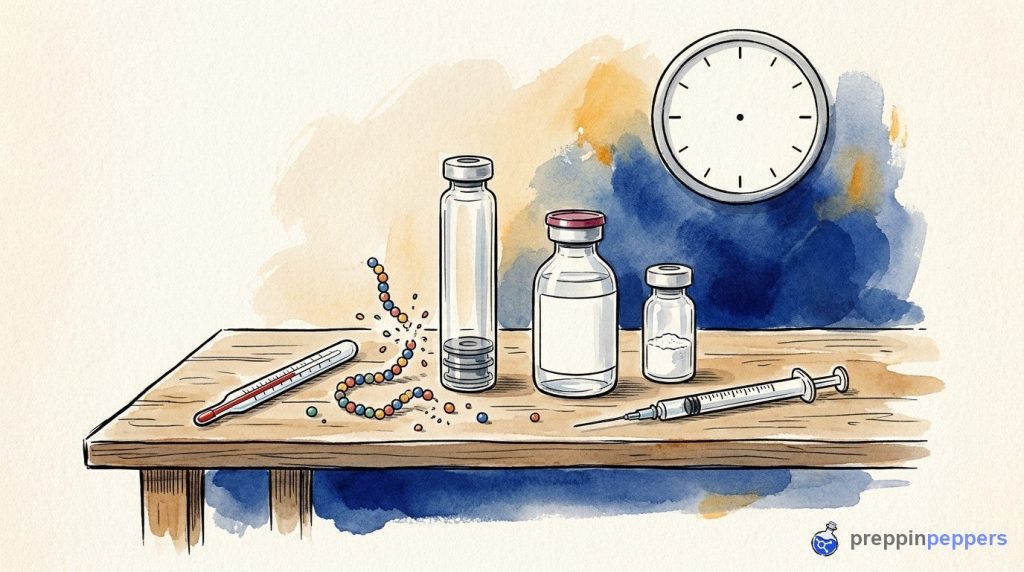
A cloudy peptide vial after reconstitution indicates precipitation, where peptide molecules aggregate and fall out of solution. Common causes include temperature shock, solvent mismatch, or rapid mixing, and the issue... Read more...
What's silently degrading the peptide in your cartridge
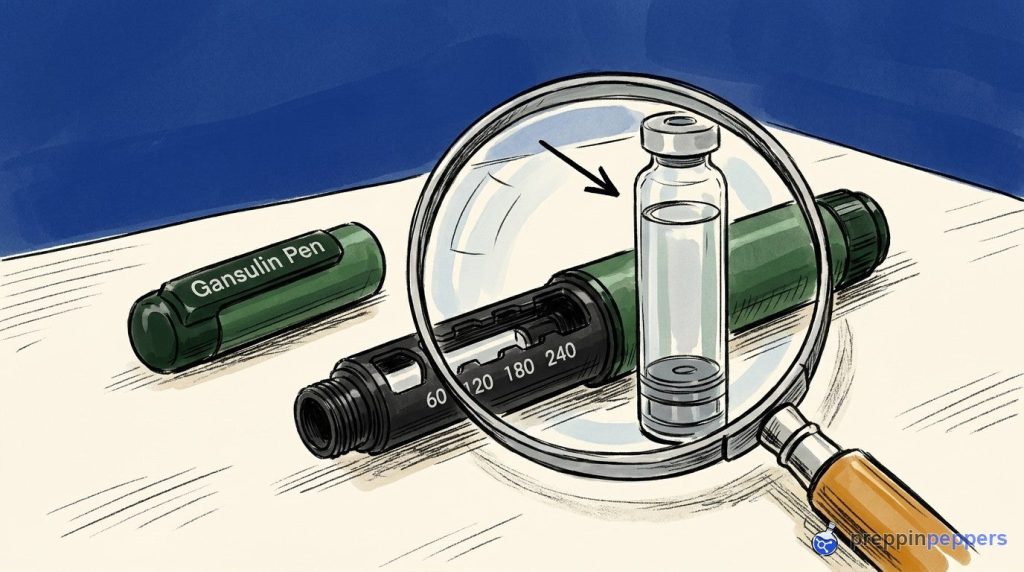
Reconstituted peptide in a research cartridge degrades through hydrolysis, heat-driven reaction kinetics, light exposure, and freeze-thaw stress. Once diluent is added and the solution is drawn into a loaded cartridge,... Read more...
The Hidden Volume Error in Your Peptide Pen
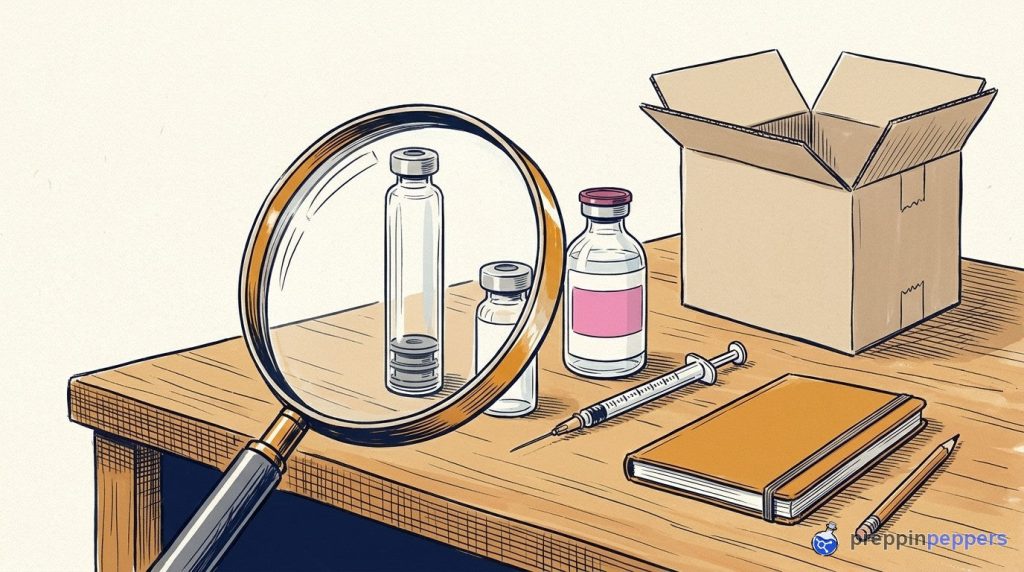
A hidden volume error is the mismatch between the number you set on a click-dial and the volume of liquid the plunger actually delivers. It is called "hidden" because the... Read more...
The cartridge label mistake that scrambles your whole experiment
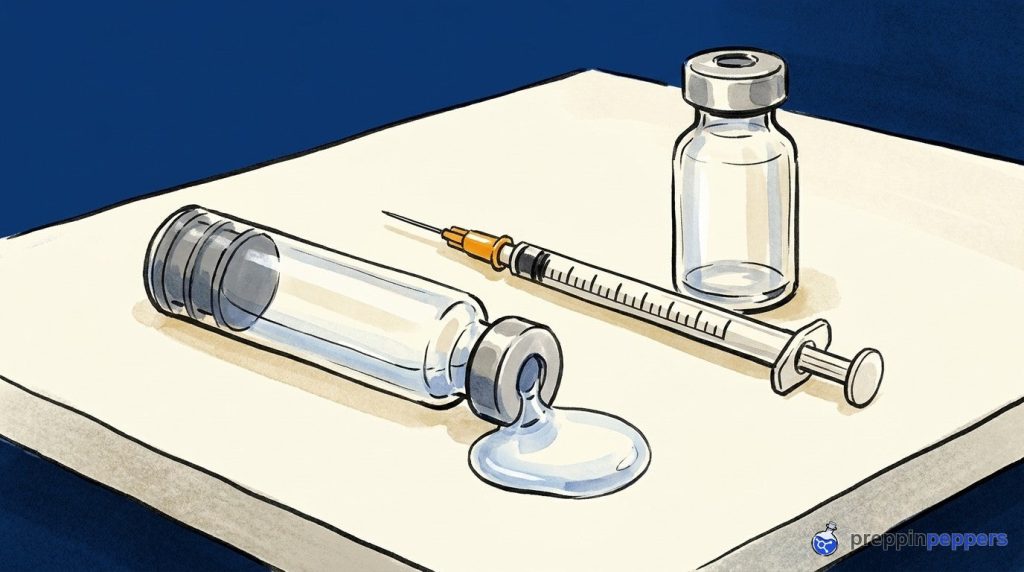
A reconstitution cartridge label documents the reconstitution date, peptide concentration, and diluent type so researchers can track sample age and avoid misidentifying materials in the lab. For research and educational... Read more...
The cartridge-filling mistake that wastes your peptide dose
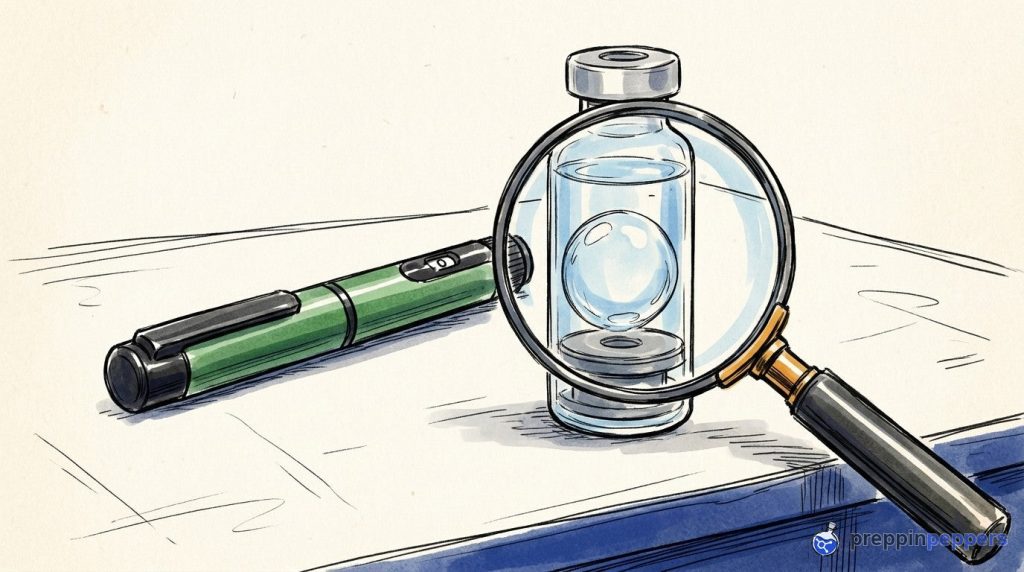
A cartridge fill is the transfer of a reconstituted peptide solution from its vial into a 3 ml glass cartridge for laboratory storage and handling. The process determines whether the... Read more...
The air bubble quietly throwing off your pen's accuracy
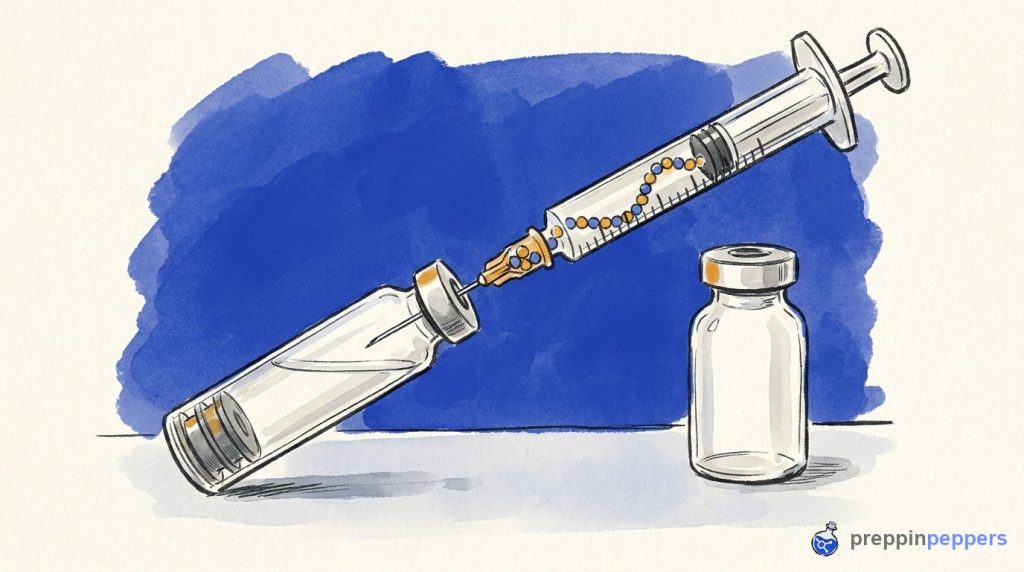
An air pocket trapped at the septum end of a 3 ml glass cartridge is what causes a reusable reconstitution pen to deliver fluid late or in reduced volume. Loading... Read more...
Stop losing your peptide when filling cartridges
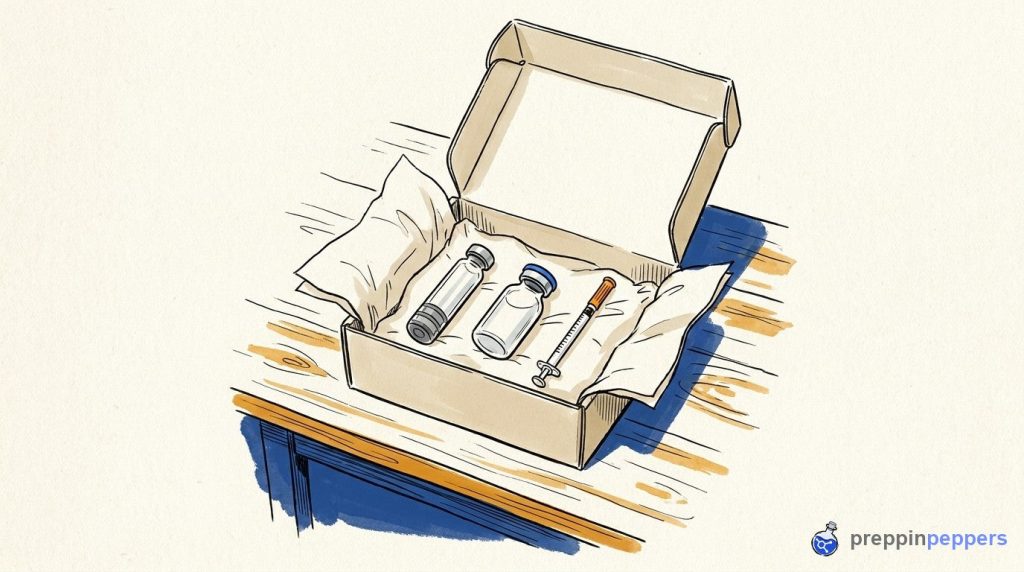
Cartridge filling is the laboratory step of moving a reconstituted peptide solution from its preparation vial into a precision glass cartridge for research storage, a transfer that can quietly waste... Read more...
What Reddit Recommends in a Peptide Starter Kit
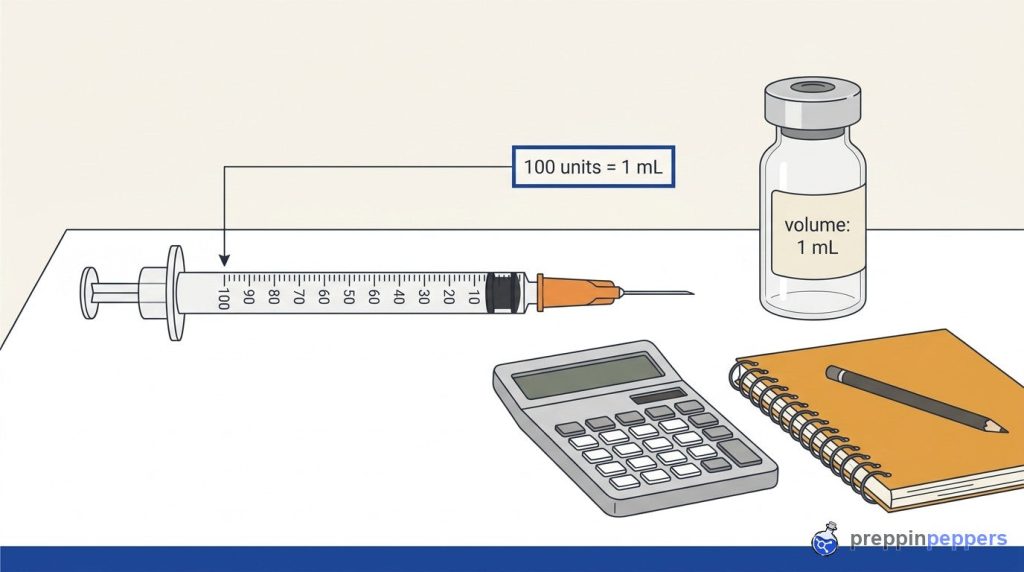
Reddit's top peptide starter kit picks, fact-checked with reconstitution math and handling notes for researchers ready to build a reliable lab setup. Read more...
Reconstitution Calculator: The Reddit Math, Automated

Peptide reconstitution calculator for research labs: automate the water-to-units math Reddit keeps asking, with verified formulas and handling notes. Read more...
Get more of The Lab in your Google results