
The Lab

Reconstitution guides, a growing peptide reference, and bench-ready calculators. For research and educational reference only.

GDF-8 (Myostatin): Reference Overview and Reconstitution Notes

GDF-8, also called myostatin, is a TGF-beta superfamily growth factor grouped under metabolic and muscle-regulation research, and it is research-only and not FDA-approved. Read more...
FOXO4-DRI: Reference Overview and Reconstitution Notes

FOXO4-DRI is a synthetic D-retro-inverso peptide studied in the anti-aging and longevity research category, and it is research-only and not approved by any regulator. Read more...
Follistatin: Reference Overview and Reconstitution Notes
Follistatin is a secreted glycoprotein of the myostatin and TGF-beta binding family, grouped in muscle and metabolic research, and is a research-only compound that is not FDA-approved. Read more...
EPO: Reference Overview and Reconstitution Notes

EPO (erythropoietin) is a glycoprotein hormone and erythropoiesis-stimulating agent, grouped as a hematopoietic growth factor. It is a prescription biologic, not approved by any regulator for the uses described here,... Read more...
Ecnoglutide: Reference Overview and Reconstitution Notes

Ecnoglutide is an investigational cAMP-biased GLP-1 receptor agonist peptide grouped under metabolic and weight regulation research, and it is not FDA-approved in the United States. Read more...
Dermorphin: Reference Overview and Reconstitution Notes
Dermorphin is a naturally occurring opioid heptapeptide from amphibian skin, grouped with analgesic and opioid-receptor research peptides, and it is not FDA-approved (research-only). Read more...
Crystagen: Reference Overview and Reconstitution Notes
Crystagen is a short synthetic peptide composed of a Glu-Asp-Pro tripeptide sequence, belonging to the Khavinson bioregulator family. It is classified as an immune bioregulator and is supplied solely for... Read more...
Cold Chain Basics: Keeping Vials Cold in Transit

An educational reference on moving refrigerated vials while keeping them within a stable cool range and avoiding both heat and accidental freezing. Read more...
Chonluten: Reference Overview and Reconstitution Notes

Chonluten is a synthetic short-peptide (tripeptide) Khavinson-type bioregulator studied in respiratory-tissue research contexts and is not FDA-approved, remaining a research-only material. Read more...
Cartalax: Reference Overview and Reconstitution Notes
Cartalax is a synthetic short-chain peptide belonging to the Khavinson bioregulator family, classified among cartilage and connective-tissue peptides. It is intended strictly for research use and is not approved by... Read more...
Cardiogen: Reference Overview and Reconstitution Notes
Cardiogen is a short synthetic peptide of the Khavinson bioregulator family, grouped as a heart or cardiovascular tissue bioregulator, and it is research-only and not FDA-approved. Read more...
Bronchogen: Reference Overview and Reconstitution Notes
Bronchogen is a synthetic short-peptide (tetrapeptide) bioregulator of the Khavinson family, grouped with the bronchopulmonary tissue bioregulators, that is not FDA-approved and is handled as a research-only material. Read more...
ARA-290: Reference Overview and Reconstitution Notes

ARA-290 (cibinetide) is an 11-amino-acid erythropoietin-derived peptide studied in the context of tissue repair and inflammation, and it is not approved by any regulator for any indication. Read more...
Amycretin: Reference Overview and Reconstitution Notes

Amycretin is a unimolecular GLP-1 and amylin receptor agonist studied in the context of metabolic and weight regulation, and it is investigational and not FDA-approved. Read more...
AOD-9604: Reference Overview and Reconstitution Notes

AOD-9604 is a synthetic fragment of the human growth hormone C-terminus, grouped in metabolic and weight-regulation research, and it is not approved as a drug by any major regulatory authority. Read more...
Adamax: Reference Overview and Reconstitution Notes

Adamax is a synthetic Semax-derived melanocortin peptide grouped in the cognitive and neuromodulatory research category, and it is a research-only compound that is not approved by any regulator. Read more...
ACE-031: Reference Overview and Reconstitution Notes
ACE-031 (ramatercept) is an investigational activin receptor type IIB (ActRIIB) Fc-fusion protein studied in the context of muscle mass regulation. It remains research-only and is not approved by any regulator. Read more...
5-Amino-1MQ: Reference Overview and Reconstitution Notes
5-Amino-1MQ is a synthetic small-molecule NNMT inhibitor grouped with metabolic and weight-regulation research compounds. It is intended for research use only and has not been approved by any regulator. Read more...
Why your GLP-1 vial's breakdown product acts differently
GLP-1's inactive breakdown product is a peptide fragment left behind once the native hormone degrades — inside a GLP-1 vial in storage, in solution after reconstitution, or in the body.... Read more...
Why one mass number can't prove your peptide is pure

A sialylated N-glycopeptide is a peptide backbone that still has a sugar chain — a glycan — attached at an asparagine residue, where that glycan also carries a sugar called... Read more...
Your v4 peptide pen is metering wrong and here's why
For research and educational reference only. PreppinPeppers sells laboratory hardware and materials (reconstitution pens, cartridges, and bacteriostatic water); it does not sell peptides or any substance for consumption. This is... Read more...
P21: Reference Overview and Reconstitution Notes
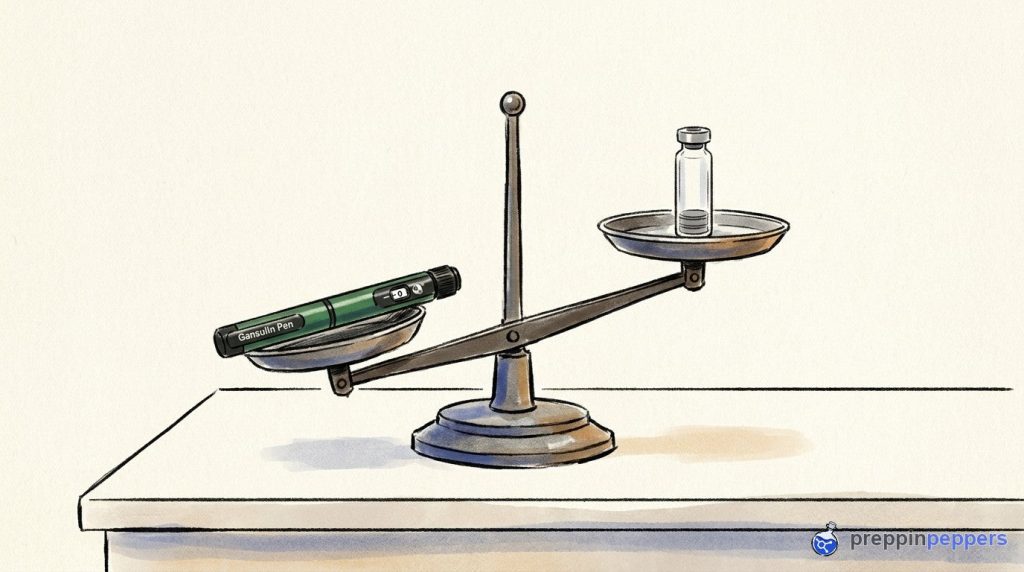
P21 (P021) is a synthetic CNTF-derived neurogenic peptide studied in cognitive and neurological research contexts, and it is a research-only compound that is not FDA-approved. Read more...
Why Disposable Peptide Pens Waste More Than You Think
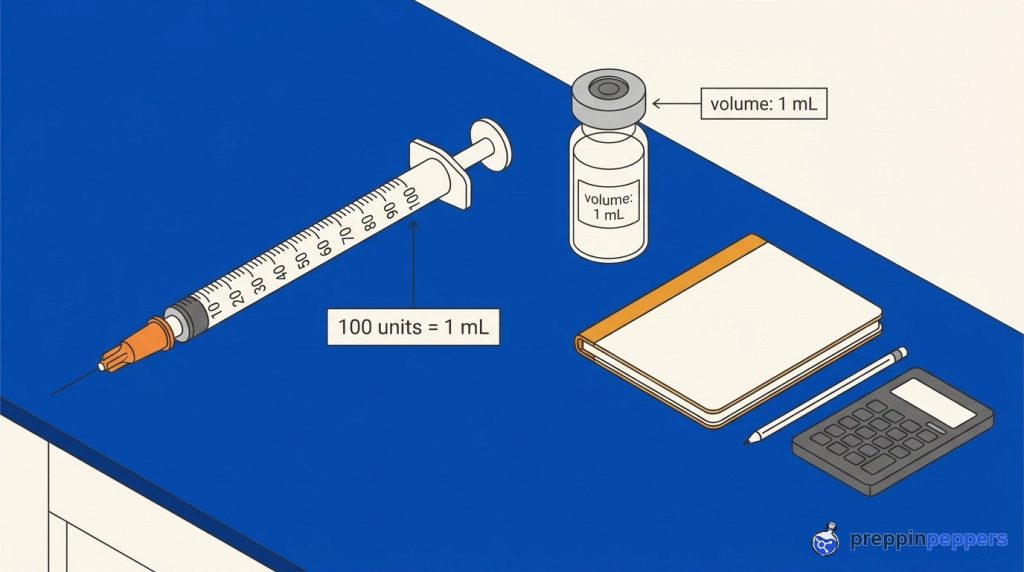
A disposable peptide pen is a single-use, click-dial laboratory injector built around a 3 mL glass cartridge, where the dial counts fixed mechanical steps rather than true microliters. Because the... Read more...
Peptide Reconstitution Math: Step-by-Step With Worked Examples

The canonical step-by-step reference for peptide reconstitution math: concentration, draw volume, three worked examples, and the common errors to avoid. Read more...
Get more of The Lab in your Google results