Research reference tools

Peptide Calculator
Reconstitution & Dosing Units, Cycle Planner, Blend Calculator

A free peptide calculator (the “pep calculator” people search for), no sign-up, nothing saved: reconstitution math from vial mg and bacteriostatic water mL to mg/mL and U-100 syringe units, a multi-peptide blend calculator, and a peptide cycle & supply planner with one-click calendar export. Work in mg or mcg for standard 3 ml cartridges and multi-use vials.

For research and educational use only. Preppin Peppers sells laboratory hardware and materials (reconstitution pens, cartridges, and bacteriostatic water), not peptides or anything for consumption. All content here, including the calculators, is educational and is not medical, veterinary, dosing, or compounding advice. It has not been evaluated by the FDA and is not intended to diagnose, treat, cure, or prevent any condition, or for human or animal use. You are responsible for complying with your local laws, and use is at your own risk.

Peptide Reconstitution Calculator

Enter your vial and the bacteriostatic (or sterile) water you added, then see exactly how many units to draw. Toggle mg or mcg, and hover any ? for help.

Concentration?How concentrated the mixed solution is: milligrams of peptide per millilitre.5.0 mg/ml
Volume to draw?The millilitres you would draw to get your target amount.0.05 ml
Draw on a U-100 scale?The same volume in units on a standard U-100 syringe or pen. 1 unit = 0.01 ml.5 units
Per unit?How much peptide one unit on a U-100 syringe delivers at this concentration.50 mcg
Draws per vial?How many target-size draws one vial holds, rounded down.10

1 unit on a U-100 syringe or pen = 0.01 ml. 1 mg = 1000 mcg. Illustrative fluid math for research reconstitution.

How to reconstitute your vial

Reconstitution is adding liquid, almost always bacteriostatic water, to a freeze-dried (lyophilized) peptide so it can be measured accurately.

  1. Clean both stoppers. Wipe the bacteriostatic water vial and the peptide vial with an alcohol swab before puncturing either one.
  2. Draw the water first. Pull the full amount of bacteriostatic water into the syringe before adding anything to the peptide vial.
  3. Add the water slowly. Aim the stream down the inside wall of the vial instead of blasting the powder directly.
  4. Swirl gently. Roll or swirl the vial until the powder dissolves fully. Never shake it hard.
  5. Refrigerate after mixing. Keep the reconstituted vial cold and away from light unless the label says otherwise.

Enter quantities from your documented laboratory protocol. This calculator supplies arithmetic, not a protocol or a recommended amount.

How the math works

The peptide dissolves evenly in the water you add, so the concentration is simply the milligrams in the vial divided by the millilitres of water. U-100 syringes are marked in units, and 100 units equal 1 ml. The three formulas this calculator uses:

  • Concentration (mg/ml) = vial mg ÷ water ml
  • Units to draw = (target mcg ÷ (vial mg × 1000)) × water ml × 100
  • Draws per vial = (vial mg × 1000) ÷ target mcg, rounded down

Example: a 5 mg vial reconstituted with 2 ml of bacteriostatic water is 2.5 mg/ml, or 25 mcg per unit. A 250 mcg target is 10 units on a U-100 syringe (0.10 ml), and the vial holds 20 draws.

Peptide Cycle Calculator & Supply Planner

Add a card per peptide with its amount, schedule, and cycle length, then export to your calendar. Hover any ? for help.

Research supply & scheduling math only. This peptide cycle calculator maps a research schedule and its resupply math — the vials and cartridges a planned run needs, reconstitution timing, and what is left over. It is not a dosing schedule, a protocol, or medical or veterinary advice. Enter study amounts, dates and intervals from your documented laboratory protocol. No administration schedule is recommended.
Imports into Google Calendar, Apple Calendar and Outlook.

Generated in your browser and never stored. For research planning and supply estimation only, not dosing guidance.

DIY Peptide Blend Calculator

Mixing in one cartridge? Combining peptides is a stability question, not just a volume one. Some stay stable together, others degrade faster, and any blend shortens the beyond-use window. If compatibility is unknown, reconstitute separately or keep short-dated blends cold. This tool handles the volumes once you have decided what can share a cartridge.

Combine peptides into one cartridge and see the draw for each. Hover any ? for help.

Solution in cartridge?The combined volume of the reconstituted solutions you draw into the cartridge.—
Top-up water?Plain bacteriostatic water added last when Fill cartridge is on. With no top-up this shows the spare room left in the cartridge.—
Each draw?The volume of one draw in U-100 units and millilitres. With no top-up it is the blended solution divided by draws; with Fill cartridge it is the cartridge size divided by draws.—
Each draw contains—

Assumes each peptide dissolves fully and mixes evenly. Shelf life varies by peptide and handling; research planning math only, not dosing, compounding, or storage guidance. Verify material compatibility, handling and storage against your documented laboratory protocol.

Pairs with our hardware

Everything these tools are built around

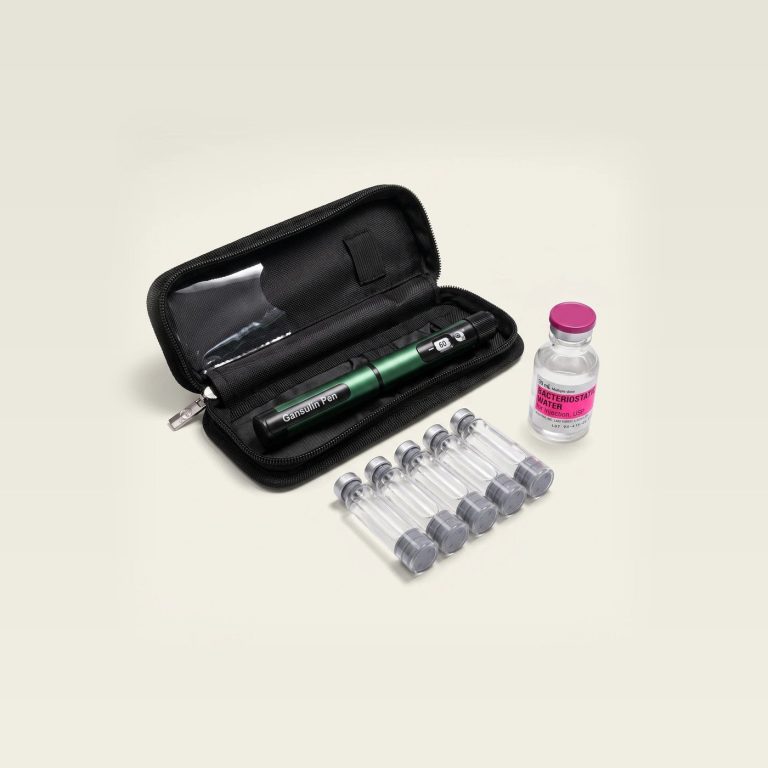
Reusable all-metal pens, standard 3 ml glass cartridges, and USP bacteriostatic water — the hardware and diluent the calculators assume.

Hardware

Will this cartridge fit my pen?

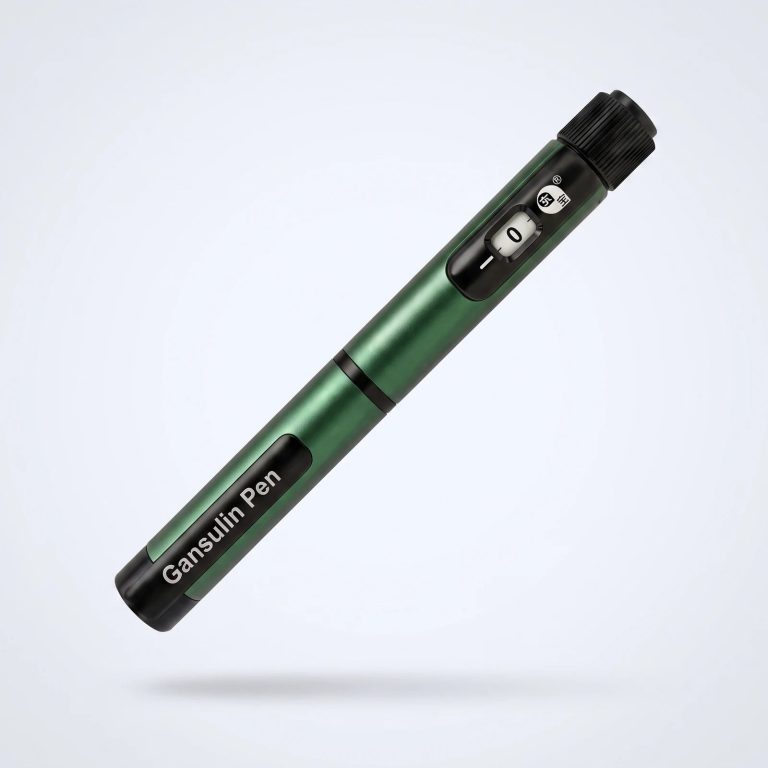
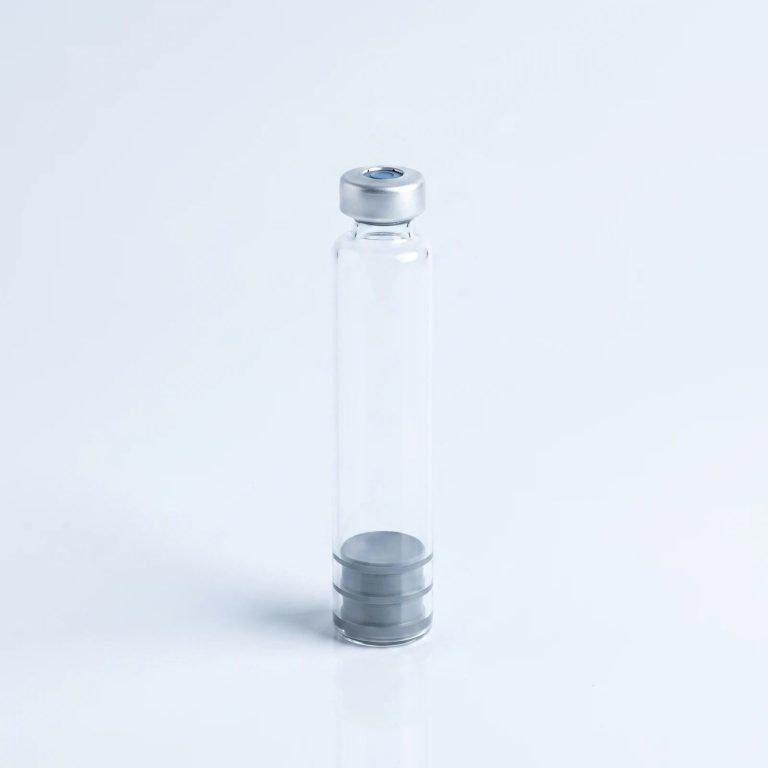
Every reusable pen we sell — V1, V2, V3 and the Gansulin pen — takes the same cartridge: a standard 3 ml (300-unit) glass cartridge with the 11 mm long plunger (stopper), the cartridge we sell. The glass is standard (about 11.6 mm outer diameter, 62–63 mm long, 8 mm crimp neck). The thing that most often stops a cartridge fitting is not the diameter or the length, it is the plunger height: 3 ml cartridges are also made with a shorter, about 8 mm plunger, which is a different format.

Compatibility at a glance

Fit is determined by the plunger height. All four pens accept the same cartridge, so a cartridge that fits one fits all of them.
Cartridge V1 pen
80 units
V2 pen
60 units
V3 pen
60 units
Gansulin pen
1–60 units
Our standard 3 ml glass cartridge FitsFitsFitsFits
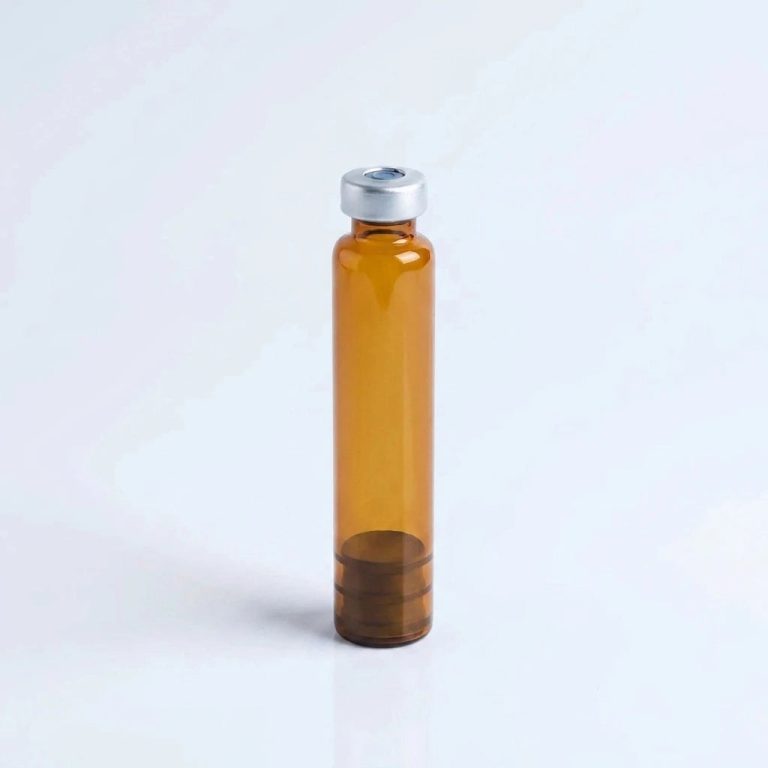
Our amber 3 ml glass cartridge FitsFitsFitsFits
Third-party 3 ml cartridge, 11 mm long plunger FitsFitsFitsFits
Third-party 3 ml cartridge, short (about 8 mm) plunger Different formatDifferent formatDifferent formatDifferent format

Check a cartridge you already have

All four take the same cartridge.
Visible through the glass: ours is about as tall as the barrel is wide.
Ours are 3 ml (300 units).
Ours are about 62–63 mm.
Ours are about 11.6 mm at the barrel.
Compare the plunger height first. Leave a measurement blank if you do not have it — the plunger height decides most cases.

What our cartridges measure

Representative for the format and varying slightly by manufacturer. The amber cartridge is dimensionally identical to the clear one; only the glass differs.
Capacity3 ml (300 units on a U-100 scale)
Plunger (stopper)11 mm long plunger
Outer diameter at the barrelabout 11.6 mm
Inner diameterabout 9.7 mm
Overall lengthabout 62 to 63 mm
Crimp finish8 mm

Measurements are taken from our own product specifications for the standard 3 ml glass cartridge and amber 3 ml glass cartridge. Pens are listed in the peptide pens collection.

Reference & how it works

A peptide calculator (reconstitution calculator) does one thing: reconstitution is the arithmetic of turning a freeze-dried vial into a measured solution: add a known volume of bacteriostatic water to a known mass of compound, and the concentration is simply mass divided by volume. The reference tables below are fixed values you can check by hand or cite — expand any section.

How the peptide reconstitution calculator works

Enter the milligrams in your vial and the millilitres of water, and the calculator returns the concentration in mg/mL, the volume to draw for any target amount, and the equivalent on a U-100 syringe scale (where 1 unit = 0.01 mL). It also shows how many equal portions a vial holds. Everything runs in your browser; nothing is saved or sent anywhere.

Worked example: 5 mg vial + 2 mL bacteriostatic water

This is the same arithmetic the peptide calculator runs, written out so you can check it by hand.

  1. Concentration. 5 mg ÷ 2 mL = 2.5 mg/mL, which is 2,500 mcg per mL.
  2. Per syringe unit. On a U-100 syringe 1 unit = 0.01 mL, so each unit holds 2,500 × 0.01 = 25 mcg.
  3. Volume for a target amount. For an example target of 250 mcg: 250 ÷ 2,500 = 0.1 mL = 10 units.
  4. Draws per vial. 5,000 mcg ÷ 250 mcg = 20 equal draws from the vial.

Change only the water and everything shifts: the same 5 mg vial in 3 mL is 1.67 mg/mL (about 16.7 mcg per unit), so the same 250 mcg target becomes 15 units. That is why the water volume is a measurement-convenience choice, not a fixed rule. The 250 mcg figure is an arithmetic example only, not a recommendation for any compound.

Bacteriostatic water volumes, units per mL and what fits a 3 mL cartridge

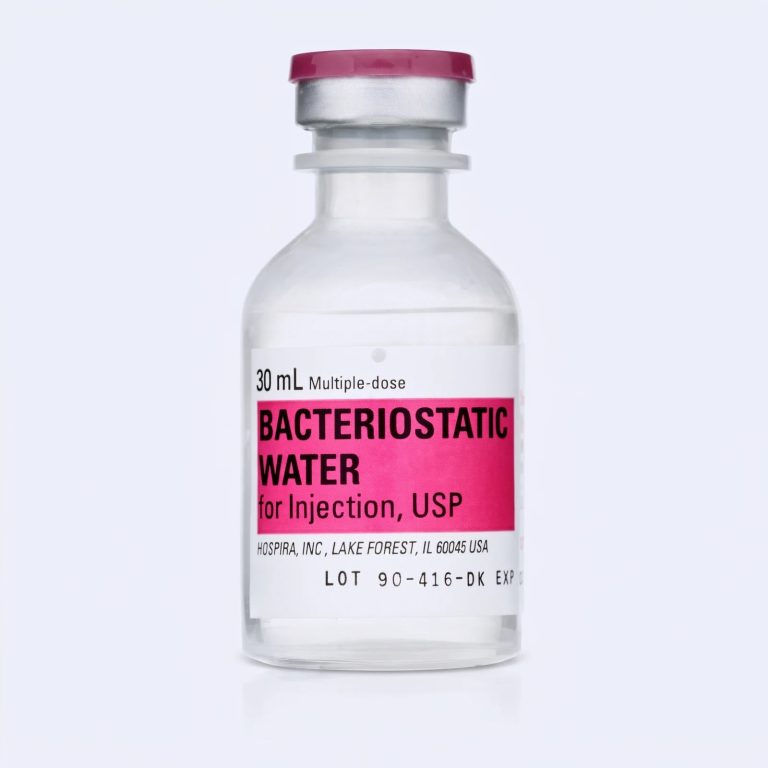
Bacteriostatic water is sterile water with 0.9% benzyl alcohol, which is what lets a reconstituted vial be drawn from more than once; plain sterile water has no preservative and is a single-use diluent. Most bench workflows add 1, 2 or 3 mL to a vial:

  • 1 mL gives the most concentrated solution and the smallest draws (100 units on a U-100 syringe covers the whole vial), which makes tiny volumes harder to read.
  • 2 mL is the common middle ground: half the concentration of 1 mL, so every draw is twice as many units and easier to read on the scale.
  • 3 mL matches the capacity of a standard 3 mL glass cartridge (300 U-100 units), so a vial reconstituted at 3 mL transfers into one cartridge without leftover.

Units per mL is always 100 on a U-100 scale; what changes with the water volume is how many mcg ride in each unit. A cartridge-based reconstitution pen such as the Gansulin pen dials that volume in unit clicks, which is why the calculator reports every result in units as well as mL.

Reconstitution concentration reference (mg/mL)

Each cell is the resulting concentration for a given vial mass and diluent volume, with the amount delivered per U-100 unit in parentheses (1 unit = 0.01 mL, 1 mg = 1000 mcg). Concentration = vial mg ÷ water mL.

Reconstitution concentration reference (mg/mL, with mcg per U-100 unit). Fluid-mixing arithmetic for laboratory reference; not a dosing table.
Vial mass ↓ / Water →1 mL2 mL3 mL5 mL
2 mg2.0 (20)1.0 (10)0.67 (6.7)0.4 (4)
5 mg5.0 (50)2.5 (25)1.67 (16.7)1.0 (10)
10 mg10.0 (100)5.0 (50)3.33 (33.3)2.0 (20)
15 mg15.0 (150)7.5 (75)5.0 (50)3.0 (30)
20 mg20.0 (200)10.0 (100)6.67 (66.7)4.0 (40)
30 mg30.0 (300)15.0 (150)10.0 (100)6.0 (60)

U-100 unit → mL → mg conversion reference

On a U-100 graduated syringe, 100 units = 1 mL, so 1 unit = 0.01 mL. The mg columns show how a stated concentration converts to mass per volume — measurement arithmetic, not dose guidance.

Unit-to-volume conversion for U-100 syringes, with mass at four example concentrations. mg = mL × concentration.
UnitsmLmg @1 mg/mLmg @2.5 mg/mLmg @5 mg/mLmg @10 mg/mL
10.010.010.0250.050.1
20.020.020.050.10.2
50.050.050.1250.250.5
100.100.10.250.51.0
200.200.20.51.02.0
500.500.51.252.55.0
1001.001.02.55.010.0

Per-compound reconstitution calculators

Compound-specific references with molecular data (formula, molecular weight, CAS) and a pre-scoped concentration matrix, for common research compounds:

Frequently asked questions

How do you calculate peptide reconstitution concentration?

Concentration equals the milligrams of compound in the vial divided by the millilitres of bacteriostatic water you add. A 10 mg vial reconstituted with 2 mL of water is 10 ÷ 2 = 5 mg/mL. The calculator does this automatically and also converts it to mcg per U-100 unit.

What is a pep calculator?

“Pep calculator” is shorthand for a peptide calculator: the same reconstitution arithmetic — vial milligrams, water millilitres, the resulting mg/mL, and how that reads in units on a U-100 syringe. This page is that tool, plus a blend calculator and a cycle and supply planner.

What is a reconstitution calculator?

A reconstitution calculator converts a freeze-dried vial and a diluent volume into a concentration (mg/mL), then converts any target amount into a draw volume in mL and U-100 units. It is measurement arithmetic: it does not decide what amount is appropriate for any compound.

What does 1 unit on a U-100 syringe equal in mL?

On a U-100 graduated syringe, 100 units = 1 mL, so 1 unit = 0.01 mL. The conversion reference table above lists common unit-to-mL-to-mg equivalents at several example concentrations.

How do I convert between mg and mcg?

1 mg = 1000 mcg. The calculator lets you enter a target in either mg or mcg and handles the conversion; the reference tables show mcg-per-unit so you can read a small amount without converting by hand.

How much bacteriostatic water should I add to a vial?

There is no single correct volume — it sets the concentration. More water gives a more dilute, easier-to-measure solution but a larger draw volume; less water gives a more concentrated solution and smaller draws. Some compounds dissolve more cleanly when more dilute. Use the concentration matrix above to see what each vial-and-water combination produces, then pick the concentration you want to work with. Choosing a preparation concentration is a solubility and handling decision.

What is mg/mL and why does it matter?

mg/mL (milligrams per millilitre) is the concentration — how much compound is dissolved in each millilitre of solution. It is the number that lets you translate any target amount into a volume or a number of syringe units, and it is the core output of the reconstitution calculator.

How many portions does one vial hold?

Divide the total mass in the vial by the target amount per portion. A 10 mg (10,000 mcg) vial at a 250 mcg target yields 40 equal portions. The calculator’s “draws per vial” output computes this for you, rounded down.

Is the calculator free, and is anything stored?

Yes — it is completely free, no sign-up, and it runs entirely in your browser. No inputs are saved, sent, or stored anywhere. The reference tables are static and can be checked by hand.

Is there a peptide cycle calculator?

Yes. The cycle and supply planner maps a research schedule across one or more compounds and returns the supply math — how many vials and cartridges a planned run needs, the reconstitution and resupply timing, and what is left over — with a one-click calendar export. It plans research supply and scheduling, not dosing; obtain any target amounts from a licensed provider.

All of the above is fluid-mixing arithmetic for laboratory and research reference only. It is not dosing, medical, or therapeutic guidance, and nothing here is intended for human or animal use.

Syringe units reference

What the syringe reads, by compound and vial size

If you searched for a “peptide dosage chart”, the part of that question we can answer is the measurement: a vial of a given size, reconstituted with a given amount of water, gives a fixed concentration, and every mark on a U-100 syringe then corresponds to a fixed number of milligrams. Each card below shows that for the common vial sizes at the usual 2 mL of bacteriostatic water. It is arithmetic for laboratory reference. It is not a dosing table, a protocol, or medical advice.

The one rule behind every card: units = amount (mg) ÷ concentration (mg/mL) × 100, and 100 units is 1 mL. A 10 mg vial in 2 mL is 5 mg/mL, so 10 units holds 0.5 mg.

Tirzepatide

Common vials: 5 mg · 10 mg · 15 mg · 30 mg

A 10 mg Tirzepatide vial reconstituted with 2 mL of bacteriostatic water is 5 mg/mL, so on a U-100 syringe 10 units holds 0.5 mg and 50 units holds 2.5 mg.

5 mg vial+ 2 mL water = 2.5 mg/mL (25 mcg per unit)
  1. 10units0.25 mg
  2. 20units0.5 mg
  3. 50units1.25 mg
  4. 100units2.5 mg
10 mg vial+ 2 mL water = 5 mg/mL (50 mcg per unit)
  1. 10units0.5 mg
  2. 20units1 mg
  3. 50units2.5 mg
  4. 100units5 mg
15 mg vial+ 2 mL water = 7.5 mg/mL (75 mcg per unit)
  1. 10units0.75 mg
  2. 20units1.5 mg
  3. 50units3.75 mg
  4. 100units7.5 mg
30 mg vial+ 2 mL water = 15 mg/mL (150 mcg per unit)
  1. 10units1.5 mg
  2. 20units3 mg
  3. 50units7.5 mg
  4. 100units15 mg

Using 1 mL of water instead? Double the mg at each stop. Using 3 mL? Divide by 1.5. Open the Tirzepatide calculator

Dual GIP/GLP-1 receptor agonist, 39 residues, MW 4813. Measurement arithmetic for laboratory reference; not dosing guidance.

Retatrutide

Common vials: 5 mg · 10 mg · 20 mg

A 10 mg Retatrutide vial reconstituted with 2 mL of bacteriostatic water is 5 mg/mL, so on a U-100 syringe 10 units holds 0.5 mg and 50 units holds 2.5 mg.

5 mg vial+ 2 mL water = 2.5 mg/mL (25 mcg per unit)
  1. 10units0.25 mg
  2. 20units0.5 mg
  3. 50units1.25 mg
  4. 100units2.5 mg
10 mg vial+ 2 mL water = 5 mg/mL (50 mcg per unit)
  1. 10units0.5 mg
  2. 20units1 mg
  3. 50units2.5 mg
  4. 100units5 mg
20 mg vial+ 2 mL water = 10 mg/mL (100 mcg per unit)
  1. 10units1 mg
  2. 20units2 mg
  3. 50units5 mg
  4. 100units10 mg

Using 1 mL of water instead? Double the mg at each stop. Using 3 mL? Divide by 1.5. Open the Retatrutide calculator

Triple GIP/GLP-1/glucagon receptor agonist. Measurement arithmetic for laboratory reference; not dosing guidance.

Semaglutide

Common vials: 2 mg · 5 mg · 10 mg

A 5 mg Semaglutide vial reconstituted with 2 mL of bacteriostatic water is 2.5 mg/mL, so on a U-100 syringe 10 units holds 0.25 mg and 50 units holds 1.25 mg.

2 mg vial+ 2 mL water = 1 mg/mL (10 mcg per unit)
  1. 10units0.1 mg
  2. 20units0.2 mg
  3. 50units0.5 mg
  4. 100units1 mg
5 mg vial+ 2 mL water = 2.5 mg/mL (25 mcg per unit)
  1. 10units0.25 mg
  2. 20units0.5 mg
  3. 50units1.25 mg
  4. 100units2.5 mg
10 mg vial+ 2 mL water = 5 mg/mL (50 mcg per unit)
  1. 10units0.5 mg
  2. 20units1 mg
  3. 50units2.5 mg
  4. 100units5 mg

Using 1 mL of water instead? Double the mg at each stop. Using 3 mL? Divide by 1.5. Open the Semaglutide calculator

GLP-1 receptor agonist, 31 residues, MW 4114. Measurement arithmetic for laboratory reference; not dosing guidance.

Cagrilintide

Common vials: 5 mg · 10 mg

A 10 mg Cagrilintide vial reconstituted with 2 mL of bacteriostatic water is 5 mg/mL, so on a U-100 syringe 10 units holds 0.5 mg and 50 units holds 2.5 mg.

5 mg vial+ 2 mL water = 2.5 mg/mL (25 mcg per unit)
  1. 10units0.25 mg
  2. 20units0.5 mg
  3. 50units1.25 mg
  4. 100units2.5 mg
10 mg vial+ 2 mL water = 5 mg/mL (50 mcg per unit)
  1. 10units0.5 mg
  2. 20units1 mg
  3. 50units2.5 mg
  4. 100units5 mg

Using 1 mL of water instead? Double the mg at each stop. Using 3 mL? Divide by 1.5. Use the calculator for other volumes

Long-acting amylin analogue. Measurement arithmetic for laboratory reference; not dosing guidance.

BPC-157

Common vials: 5 mg · 10 mg

A 10 mg BPC-157 vial reconstituted with 2 mL of bacteriostatic water is 5 mg/mL, so on a U-100 syringe 10 units holds 0.5 mg and 50 units holds 2.5 mg.

5 mg vial+ 2 mL water = 2.5 mg/mL (25 mcg per unit)
  1. 10units0.25 mg
  2. 20units0.5 mg
  3. 50units1.25 mg
  4. 100units2.5 mg
10 mg vial+ 2 mL water = 5 mg/mL (50 mcg per unit)
  1. 10units0.5 mg
  2. 20units1 mg
  3. 50units2.5 mg
  4. 100units5 mg

Using 1 mL of water instead? Double the mg at each stop. Using 3 mL? Divide by 1.5. Open the BPC-157 calculator

15-residue gastric pentadecapeptide. Measurement arithmetic for laboratory reference; not dosing guidance.

TB-500

Common vials: 5 mg · 10 mg

A 10 mg TB-500 vial reconstituted with 2 mL of bacteriostatic water is 5 mg/mL, so on a U-100 syringe 10 units holds 0.5 mg and 50 units holds 2.5 mg.

5 mg vial+ 2 mL water = 2.5 mg/mL (25 mcg per unit)
  1. 10units0.25 mg
  2. 20units0.5 mg
  3. 50units1.25 mg
  4. 100units2.5 mg
10 mg vial+ 2 mL water = 5 mg/mL (50 mcg per unit)
  1. 10units0.5 mg
  2. 20units1 mg
  3. 50units2.5 mg
  4. 100units5 mg

Using 1 mL of water instead? Double the mg at each stop. Using 3 mL? Divide by 1.5. Open the TB-500 calculator

Thymosin beta-4 fragment. Measurement arithmetic for laboratory reference; not dosing guidance.

Wolverine stack (BPC-157 + TB-500)

Common vials: 10 mg · 20 mg

A 20 mg Wolverine stack (BPC-157 + TB-500) vial reconstituted with 2 mL of bacteriostatic water is 10 mg/mL, so on a U-100 syringe 10 units holds 1 mg and 50 units holds 5 mg.

10 mg vial+ 2 mL water = 5 mg/mL (50 mcg per unit)
  1. 10units0.5 mg
  2. 20units1 mg
  3. 50units2.5 mg
  4. 100units5 mg
20 mg vial+ 2 mL water = 10 mg/mL (100 mcg per unit)
  1. 10units1 mg
  2. 20units2 mg
  3. 50units5 mg
  4. 100units10 mg

Using 1 mL of water instead? Double the mg at each stop. Using 3 mL? Divide by 1.5. Use the calculator for other volumes

Blend vial; the size is total peptide mass (e.g. 5 mg + 5 mg = 10 mg). Measurement arithmetic for laboratory reference; not dosing guidance.

Tesamorelin

Common vials: 2 mg · 5 mg · 10 mg

A 5 mg Tesamorelin vial reconstituted with 2 mL of bacteriostatic water is 2.5 mg/mL, so on a U-100 syringe 10 units holds 0.25 mg and 50 units holds 1.25 mg.

2 mg vial+ 2 mL water = 1 mg/mL (10 mcg per unit)
  1. 10units0.1 mg
  2. 20units0.2 mg
  3. 50units0.5 mg
  4. 100units1 mg
5 mg vial+ 2 mL water = 2.5 mg/mL (25 mcg per unit)
  1. 10units0.25 mg
  2. 20units0.5 mg
  3. 50units1.25 mg
  4. 100units2.5 mg
10 mg vial+ 2 mL water = 5 mg/mL (50 mcg per unit)
  1. 10units0.5 mg
  2. 20units1 mg
  3. 50units2.5 mg
  4. 100units5 mg

Using 1 mL of water instead? Double the mg at each stop. Using 3 mL? Divide by 1.5. Open the Tesamorelin calculator

Stabilised GHRH 1-44 analogue. Measurement arithmetic for laboratory reference; not dosing guidance.

CJC-1295 + Ipamorelin

Common vials: 10 mg

A 10 mg CJC-1295 + Ipamorelin vial reconstituted with 2 mL of bacteriostatic water is 5 mg/mL, so on a U-100 syringe 10 units holds 0.5 mg and 50 units holds 2.5 mg.

10 mg vial+ 2 mL water = 5 mg/mL (50 mcg per unit)
  1. 10units0.5 mg
  2. 20units1 mg
  3. 50units2.5 mg
  4. 100units5 mg

Using 1 mL of water instead? Double the mg at each stop. Using 3 mL? Divide by 1.5. Use the calculator for other volumes

Common 5 mg + 5 mg blend; total mass shown. Measurement arithmetic for laboratory reference; not dosing guidance.

CJC-1295 (no DAC)

Common vials: 2 mg · 5 mg · 10 mg

A 5 mg CJC-1295 (no DAC) vial reconstituted with 2 mL of bacteriostatic water is 2.5 mg/mL, so on a U-100 syringe 10 units holds 0.25 mg and 50 units holds 1.25 mg.

2 mg vial+ 2 mL water = 1 mg/mL (10 mcg per unit)
  1. 10units0.1 mg
  2. 20units0.2 mg
  3. 50units0.5 mg
  4. 100units1 mg
5 mg vial+ 2 mL water = 2.5 mg/mL (25 mcg per unit)
  1. 10units0.25 mg
  2. 20units0.5 mg
  3. 50units1.25 mg
  4. 100units2.5 mg
10 mg vial+ 2 mL water = 5 mg/mL (50 mcg per unit)
  1. 10units0.5 mg
  2. 20units1 mg
  3. 50units2.5 mg
  4. 100units5 mg

Using 1 mL of water instead? Double the mg at each stop. Using 3 mL? Divide by 1.5. Open the CJC-1295 (no DAC) calculator

GHRH analogue, 29 residues. Measurement arithmetic for laboratory reference; not dosing guidance.

Ipamorelin

Common vials: 5 mg · 10 mg

A 10 mg Ipamorelin vial reconstituted with 2 mL of bacteriostatic water is 5 mg/mL, so on a U-100 syringe 10 units holds 0.5 mg and 50 units holds 2.5 mg.

5 mg vial+ 2 mL water = 2.5 mg/mL (25 mcg per unit)
  1. 10units0.25 mg
  2. 20units0.5 mg
  3. 50units1.25 mg
  4. 100units2.5 mg
10 mg vial+ 2 mL water = 5 mg/mL (50 mcg per unit)
  1. 10units0.5 mg
  2. 20units1 mg
  3. 50units2.5 mg
  4. 100units5 mg

Using 1 mL of water instead? Double the mg at each stop. Using 3 mL? Divide by 1.5. Open the Ipamorelin calculator

Pentapeptide GHS-R agonist. Measurement arithmetic for laboratory reference; not dosing guidance.

Sermorelin

Common vials: 2 mg · 5 mg

A 5 mg Sermorelin vial reconstituted with 2 mL of bacteriostatic water is 2.5 mg/mL, so on a U-100 syringe 10 units holds 0.25 mg and 50 units holds 1.25 mg.

2 mg vial+ 2 mL water = 1 mg/mL (10 mcg per unit)
  1. 10units0.1 mg
  2. 20units0.2 mg
  3. 50units0.5 mg
  4. 100units1 mg
5 mg vial+ 2 mL water = 2.5 mg/mL (25 mcg per unit)
  1. 10units0.25 mg
  2. 20units0.5 mg
  3. 50units1.25 mg
  4. 100units2.5 mg

Using 1 mL of water instead? Double the mg at each stop. Using 3 mL? Divide by 1.5. Open the Sermorelin calculator

GHRH 1-29. Measurement arithmetic for laboratory reference; not dosing guidance.

GHK-Cu

Common vials: 50 mg · 100 mg

A 100 mg GHK-Cu vial reconstituted with 2 mL of bacteriostatic water is 50 mg/mL, so on a U-100 syringe 10 units holds 5 mg and 50 units holds 25 mg.

50 mg vial+ 2 mL water = 25 mg/mL (250 mcg per unit)
  1. 10units2.5 mg
  2. 20units5 mg
  3. 50units12.5 mg
  4. 100units25 mg
100 mg vial+ 2 mL water = 50 mg/mL (500 mcg per unit)
  1. 10units5 mg
  2. 20units10 mg
  3. 50units25 mg
  4. 100units50 mg

Using 1 mL of water instead? Double the mg at each stop. Using 3 mL? Divide by 1.5. Open the GHK-Cu calculator

Copper tripeptide complex; vials are larger than most peptides. Measurement arithmetic for laboratory reference; not dosing guidance.

GLOW blend (GHK-Cu + BPC-157 + TB-500)

Common vials: 70 mg

A 70 mg GLOW blend (GHK-Cu + BPC-157 + TB-500) vial reconstituted with 2 mL of bacteriostatic water is 35 mg/mL, so on a U-100 syringe 10 units holds 3.5 mg and 50 units holds 17.5 mg.

70 mg vial+ 2 mL water = 35 mg/mL (350 mcg per unit)
  1. 10units3.5 mg
  2. 20units7 mg
  3. 50units17.5 mg
  4. 100units35 mg

Using 1 mL of water instead? Double the mg at each stop. Using 3 mL? Divide by 1.5. Use the calculator for other volumes

Typically 50 + 10 + 10 mg; total mass shown. Measurement arithmetic for laboratory reference; not dosing guidance.

KPV

Common vials: 5 mg · 10 mg

A 10 mg KPV vial reconstituted with 2 mL of bacteriostatic water is 5 mg/mL, so on a U-100 syringe 10 units holds 0.5 mg and 50 units holds 2.5 mg.

5 mg vial+ 2 mL water = 2.5 mg/mL (25 mcg per unit)
  1. 10units0.25 mg
  2. 20units0.5 mg
  3. 50units1.25 mg
  4. 100units2.5 mg
10 mg vial+ 2 mL water = 5 mg/mL (50 mcg per unit)
  1. 10units0.5 mg
  2. 20units1 mg
  3. 50units2.5 mg
  4. 100units5 mg

Using 1 mL of water instead? Double the mg at each stop. Using 3 mL? Divide by 1.5. Use the calculator for other volumes

Alpha-MSH tripeptide fragment. Measurement arithmetic for laboratory reference; not dosing guidance.

PT-141 (bremelanotide)

Common vials: 10 mg

A 10 mg PT-141 (bremelanotide) vial reconstituted with 2 mL of bacteriostatic water is 5 mg/mL, so on a U-100 syringe 10 units holds 0.5 mg and 50 units holds 2.5 mg.

10 mg vial+ 2 mL water = 5 mg/mL (50 mcg per unit)
  1. 10units0.5 mg
  2. 20units1 mg
  3. 50units2.5 mg
  4. 100units5 mg

Using 1 mL of water instead? Double the mg at each stop. Using 3 mL? Divide by 1.5. Use the calculator for other volumes

Melanocortin receptor agonist. Measurement arithmetic for laboratory reference; not dosing guidance.

MOTS-c

Common vials: 10 mg · 40 mg

A 40 mg MOTS-c vial reconstituted with 2 mL of bacteriostatic water is 20 mg/mL, so on a U-100 syringe 10 units holds 2 mg and 50 units holds 10 mg.

10 mg vial+ 2 mL water = 5 mg/mL (50 mcg per unit)
  1. 10units0.5 mg
  2. 20units1 mg
  3. 50units2.5 mg
  4. 100units5 mg
40 mg vial+ 2 mL water = 20 mg/mL (200 mcg per unit)
  1. 10units2 mg
  2. 20units4 mg
  3. 50units10 mg
  4. 100units20 mg

Using 1 mL of water instead? Double the mg at each stop. Using 3 mL? Divide by 1.5. Use the calculator for other volumes

Mitochondrial-derived 16-residue peptide. Measurement arithmetic for laboratory reference; not dosing guidance.

NAD+

Common vials: 100 mg · 500 mg

A 500 mg NAD+ vial reconstituted with 2 mL of bacteriostatic water is 250 mg/mL, so on a U-100 syringe 10 units holds 25 mg and 50 units holds 125 mg.

100 mg vial+ 2 mL water = 50 mg/mL (500 mcg per unit)
  1. 10units5 mg
  2. 20units10 mg
  3. 50units25 mg
  4. 100units50 mg
500 mg vial+ 2 mL water = 250 mg/mL (2500 mcg per unit)
  1. 10units25 mg
  2. 20units50 mg
  3. 50units125 mg
  4. 100units250 mg

Using 1 mL of water instead? Double the mg at each stop. Using 3 mL? Divide by 1.5. Use the calculator for other volumes

A dinucleotide, not a peptide; supplied lyophilised in large vials. Measurement arithmetic for laboratory reference; not dosing guidance.

SS-31 (elamipretide)

Common vials: 10 mg · 50 mg

A 50 mg SS-31 (elamipretide) vial reconstituted with 2 mL of bacteriostatic water is 25 mg/mL, so on a U-100 syringe 10 units holds 2.5 mg and 50 units holds 12.5 mg.

10 mg vial+ 2 mL water = 5 mg/mL (50 mcg per unit)
  1. 10units0.5 mg
  2. 20units1 mg
  3. 50units2.5 mg
  4. 100units5 mg
50 mg vial+ 2 mL water = 25 mg/mL (250 mcg per unit)
  1. 10units2.5 mg
  2. 20units5 mg
  3. 50units12.5 mg
  4. 100units25 mg

Using 1 mL of water instead? Double the mg at each stop. Using 3 mL? Divide by 1.5. Use the calculator for other volumes

Mitochondria-targeted tetrapeptide. Measurement arithmetic for laboratory reference; not dosing guidance.

Vial sizes are the common lyophilised formats sold by research suppliers, not a recommendation. Everything above is fluid-mixing and syringe-graduation arithmetic for laboratory and research reference only; nothing is dosing, medical, veterinary, or therapeutic guidance, and nothing is intended for human or animal use. Preppin Peppers sells laboratory hardware (reusable pens, 3 mL cartridges, bacteriostatic water), not peptides.